Tag Archives: Spin Zhira

In a new low for the Afghan conflict, UN figures reveal civilian casualties reach record high.

Linear Regression

In July 2012, using data unwittingly supplied by Regional Command South West (RCSW), I forecast that public perception of the Afghan Government would fall below that of the Taliban. My report was deemed “off-message” and suppressed. General Gurganus, the US Marine Corps General who commanded RCSW insisted ‘We are winning and the Taliban are losing.’

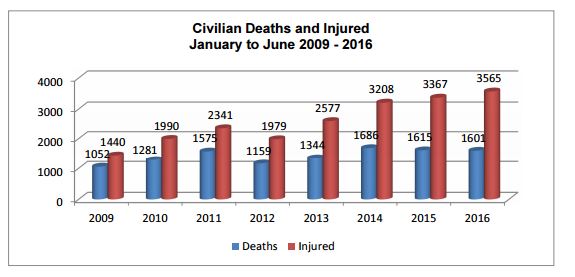
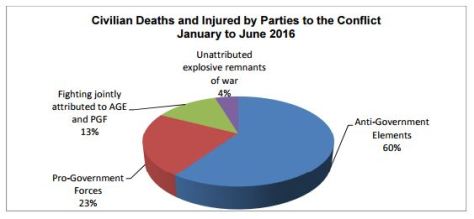
Yesterday’s report from the United Nations Assistance Mission in Afghanistan (UNAMA) sadly confirms my analysis. Not only have civilian casualties reached record levels, not only has the Afghan government largely abandoned the population it is mandated to protect but its own troops are responsible for 23% of those casualties.

UNAMA report 1

“Every single casualty documented in this report, every woman, girl, or boy denied access to education or adequate healthcare and every man or woman deprived of their livelihood, represents a failure of commitment and should be a call to action for parties to the conflict to take meaningful, concrete steps to reduce civilian suffering and increase protection. Platitudes not backed by meaningful action ring hollow over time. History and the long memory of the Afghan people will judge leaders of all parties to this conflict not by their well-meaning words, but by their conduct.” Tadamichi Yamamoto, United Nations Special Representative of the Secretary-General in Afghanistan, Kabul July 2016

Children Bear Brunt of War

Reuters: Civilian Casualties increase as Afghan Troops Battle Taliban.

The United Nations Assistance Mission in Afghanistan (UNAMA) reports that 1,601 civilians were killed in the first half of the year with a further 3,565 wounded. These figures do not include the more than 80 killed in Saturday’s suicide attack in Kabul.

The report describes the figures as “alarming and shameful” and identifies that 24% of those killed were children.

In March 2015, in an interview with the BBC Tony Blair claimed “It’s important to understand that for all the challenges in Afghanistan there have been huge gains.” I wonder whether he still clings to that fallacy today?

RAF hero proved much more than a match for kidnappers

RAF Marham
The Sunday Express reports that the serviceman who fought off would-be kidnappers outside RAF Marham was part of an elite unit “whose training is more advanced than the standard infantry”.

It is, of course, a very serious incident and no-laughing matter but I’m still really looking forward to all the banter the Express newspaper’s reporting of the attack is going to generate.

‘I RETURNED TO the barracks to find a group of soldiers standing around their bergans, like so many girls at a school disco, quietly chatting and smoking, their cigarettes glowing in the dark as they patiently waited for the transport to RAF Brize Norton. A voice addressed me from the shadows:

‘Good of you to make it, Chris.’

It was the Adjutant, Captain Rupert Stevens. Rupert had been one of the first Grenadiers I’d met almost two years ago and although he’d always been supportive of my ambition to mobilise with the battalion, that didn’t mean he was averse to a bit of squaddie banter. He informed me that our trooping flight was scheduled for 07.00 the following morning but as this was ‘Crab Air’, army slang for the Royal Air Force, this was not a departure time but a no move before time. In his opinion it was anyone’s guess when we might eventually take off.

Rivalry and deep cultural differences between the armed services ensured that Rupert, like all self‑respecting soldiers, did not have a kind word to say about the RAF. Still there was some truth behind his comments. The RAF was trying to maintain a busy air bridge between the UK and Afghanistan using an ageing fleet of Lockheed Tristar aircraft. These had first come into service in 1978 as commercial airliners operated by Pan American Airways who subsequently sold them to the RAF shortly after the Falklands War.

After 34 years of service the Tristar was showing its age and, a bit like myself, was only just about fit for purpose.

Troops had become resigned to long delays in the journey to and from Afghanistan. It’s also fair to say that the RAF, unlike the aircraft’s original owner, is not a customer focussed organisation and puts little thought into the welfare of its passengers. We would all spend many hours experiencing RAF hospitality and it was never enjoyable. Disparaging comments not only helped to pass the time but also managed expectation.

Some months later a much publicised visit to Afghanistan by James Blunt and Catherine Jenkins was cancelled after the Tristar in which they were travelling was forced to abort and return to Cyprus, not once but twice, with first an air leak and then a problem with the undercarriage. James Blunt, himself a former soldier, was not impressed and wrote an uncomplimentary article in The Telegraph which delighted the rank and file but angered the top brass, who disputed his claims of military incompetence. For Rupert, who had been tasked with organising this visit and who had boasted for days about his self‑appointed role as Catherine Jenkins’ personal assistant, this would only serve to confirm his already very low opinion of the RAF.

Ironically, despite his obvious frustration, the RAF had actually done James a favour. So far as I could tell, Rupert had invested considerable time and effort preparing a detailed and comprehensive visit programme for Catherine in which he intended personally to take care of her every need and desire. By contrast he’d assumed ‘Blunty’ would doss down in the honking transit accommodation and sort himself out.’

SPIN ZHIRA: Old Man in Helmand is the unauthorised, unvarnished and irreverent story of one man’s midlife crisis on the front line of the most dangerous district in Afghanistan where the locals haven’t forgiven the British for the occupation of 1842 or for the Russian Invasion of 1979. Of course, all infidels look the same so you can’t really tell them apart.

Purchase your copy of SPIN ZHIRA


Seriously Idyllic

So yesterday was a seriously idyllic day in a quintessentially British way. A river cruise along the River Avon under azure summer skies followed by lunch with a mysterious English Rose in the gardens of the Bath Boathouse and a late afternoon swim with Sweep the dog at Avon Riverside.
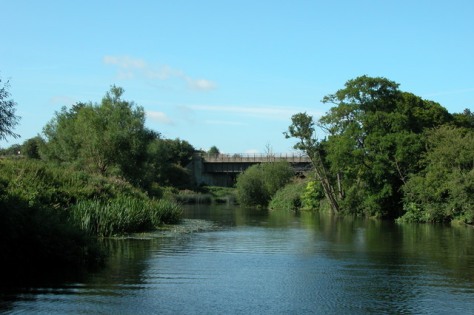
River Avon Saltford


It’s the Britain I travelled 4,500 miles to protect:

‘I TRIED HARD, harder than usual, not to raise my voice as I ushered Harry and Alfie out the front door. It was Monday morning and I didn’t want to be late for school. More importantly, I didn’t want Harry and Alfie’s last memory of their father to be of ‘Grumpy Dad’. We went through the usual checklist:

Book bag. Check.

Pack-up. Check.

Shoes on the right feet. Check.

Coat. Check.

We were off, joining the procession of carefree children and their parents making their way down the lane.

Past the Post Office and the tennis courts.

Over the hump‑backed bridge, finishing line of the hotly contested annual village duck race.

Carefully looking left and right before crossing the road by the War Memorial.

Past the Black Bull pub, scene of Sunday afternoon coca‑colas.

Up the snicket, through the five‑bar gate and into the school playground.

I hoovered up every detail of the five minute journey, conscious that it might be the last few moments I would ever spend with my children. They would not see me again until I returned from Afghanistan and, although we didn’t discuss it, that might well be in a wooden casket or, worse still, unrecognisably shattered and broken.

No good for climbing trees.

No good for playing footie in the park using coats for goal-posts.

No good for games of off‑ground touch in the front room (don’t tell Mummy).

I didn’t want to think about it. I didn’t want them to think about it.

In the days leading up to this moment I’d carefully explained to them that I would be going away for nine months but I would return for R&R – rest and recuperation – in just three months. In time I hoped for Alfie’s birthday, although I couldn’t promise this. We discussed what we would get up to in the two weeks I’d be back; this mostly involved eating junk food and watching movies. Harry and Alfie quickly cottoned on that the usual parental controls would not apply. Every time the subject came up the checklist of stuff that wasn’t normally allowed grew longer.

It was an awkward wait for the bell that would signal the start of the school day. To everyone else in that playground it was a Monday morning just like any other. Children were excitedly catching up on the weekend’s news and activities. Parents chatted in little groups, glancing at their wrist watches as they waited for the teachers to take charge. It was a scene being played out, no doubt, right across the country but as an absentee father it was not one in which I belonged. I felt that all eyes were on the stranger in the midst of this tight‑knit village community.

I wanted to justify my absence more than my presence. They may or may not have thanked me for it but I was now keeping company with rough men standing ready to do violence in order to preserve this peaceful village idyll.’

SPIN ZHIRA: Old Man in Helmand is the unauthorised, unvarnished and irreverent story of one man’s midlife crisis on the front line of the most dangerous district in Afghanistan where the locals haven’t forgiven the British for the occupation of 1842 or for the Russian Invasion of 1979. Of course, all infidels look the same so you can’t really tell them apart.

Purchase your copy of SPIN ZHIRA
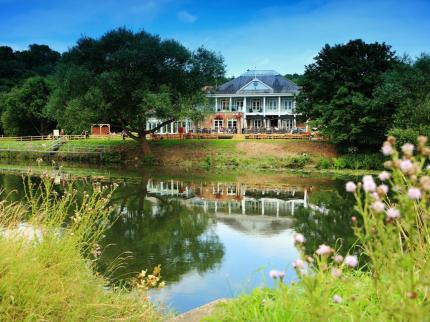
 

Boathouse Bath

What a Muppet

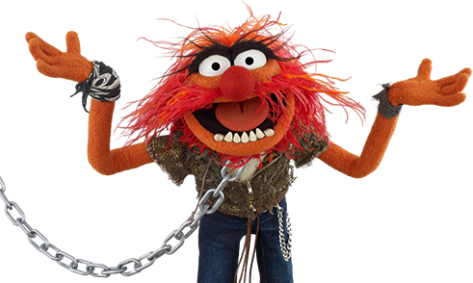
Animal
Writing in The Telegraph, former SAS officer, Colonel Tim Collins OBE warns that the  Army must reshape after Chilcot.

Colonel Collins is best know to the public for his eve of battle speech to the Royal Irish Regiment prior to the Iraq invasion. For obvious reasons it is perhaps less well known that he is also a former ‘Tier One’ Special Forces soldier and counterinsurgency specialist. As the name suggests, Tier One are Britain’s most elite troops so it’s reasonable to assume that Colonel Collins knows what he’s talking about. And on the face of it he does. The army must reshape after Chilcot. That much is clear.

It is of intense frustration to me and many others that lessons were not learned in Iraq and subsequently applied in Afghanistan, particularly with regard to counterinsurgency doctrine. Despite good intentions, both countries are now significantly worse off following Western military intervention.

Chilcot should now be the catalyst for change, or in Colonel Collins words, ‘we need to know if it was incompetence or obsequiousness that led to these blunders, and move to crush whatever caused them.’ We already knew that Colonel Collins was a straight talker.

I want to agree with Colonel Collins, I really do. After all, he is a former Tier One Special Forces soldier, a steely-eyed flat bellied killer. I’m a former wheezy part-timer. It’s not going to go well for me if we get into a fist fight. But Colonel Collins is a muppet. There I said it.

He identifies ‘intervention operations’ as the most likely future scenario for which our military should train. In other words, precisely the same kind of campaigns conducted in Iraq and Afghanistan which have so humiliated the British military. So far so good. But rather than addressing the issue of our woeful counterinsurgency strategy, the strategy that has radicalized Muslims across the globe and is the direct cause of so much chaos and suffering in the country’s we have now largely abandoned, we are treated to a barely coherent rant.

Allowing women to serve in combat roles is a ‘crazy social experiment’ imposed upon the military by ‘failed male politicians with no military knowledge’. The Armies of our European partners in NATO are  ’18-30, Club Med-style organisations with a vaguely military theme’ and so it goes on.

According to Colonel Collins what Britain needs is more infantry ‘capable of operations that were once the preserve of Special Forces and Commandos’. He recommends looking to former Commonwealth countries to make up the current shortfall in recruiting. But this isn’t arguing for change, this is arguing for more of the same.

The  disastrous campaigns in Iraq and Afghanistan were characterised by a dramatic expansion and reliance on special forces. We have learned nothing from these campaigns if we do not learn that the tactics of drone strikes, night raids and kill/capture missions undertaken by special forces only weaken the legitimacy of the counterinsurgent and make more insurgents. Politicians and senior officers may have been seduced by the raw courage, bravery and ruthless efficiency of our Tier One troops in Iraq and Afghanistan but, as history now shows, they do more harm than good.

Tactical victories have resulted in strategic failure, not once but twice. Continuing to do the same thing over and over again and expecting something different to happen is seldom a recipe for success.

Colonel Collins isn’t advocating for reform at all. He seeks to perpetuate a flawed doctrine in which he claims expertise but which has only succeeded in plunging the countries we sought to stabilise into further chaos and widen the rift between West and East. As every right minded person must agree, this is precisely not what we ought to do and it’s why Colonel Collins is a muppet. Just don’t tell him I said so.

Purchase your copy of SPIN ZHIRA

SPIN ZHIRA: Old Man in Helmand is the unauthorised, unvarnished and irreverent story of one man’s midlife crisis on the front line of the most dangerous district in Afghanistan where the locals haven’t forgiven the British for the occupation of 1842 or for the Russian Invasion of 1979. Of course, all infidels look the same so you can’t really tell them apart.

So you think it’s hot?

Afghan heat
It’s Britains hottest day of the year so far, but by Afghan standards it’s positively balmy. In the summer months temperatures in Helmand Province regularly reach 50°C/122°F:

‘I WAS LYING naked in a pool of my own sweat when the men of the Light Dragoons turned up. It can’t have been a pretty sight but they didn’t seem to notice. In the stifling heat of yet another cloudless Afghan afternoon I was sprawled on my camp cot in the transit accommodation at PB Clifton trying to remain as still as possible. Even completely naked and motionless I was still pouring with sweat in the oven‑like confines of the tent, but at least I was in the shade.

Lieutenant Ed Whitten, Sergeant Lee ‘Davo’ Davidson and the men of Support Troop, A Squadron, The Light Dragoons formed a Police Advisory Team, part of the Police Mentoring and Advisory Group (PMAG), tasked with improving the capacity and capability of the Afghan Uniformed Police. Based on everything I knew about the AUP in our district it was a much needed but enormously challenging task. Ed and his men had been given just three months to turn things around.

PB Clifton was to be their base for the duration and with no time to waste they immediately set about transforming the transit accommodation into their new home. I pulled on a pair of shorts and marvelled at their resourcefulness and ingenuity. Within a few short but industrious hours they’d created a tented palace worthy of Jalaluddin Mohammad Akbar the Great, the third and greatest emperor of the Mughal Dynasty whose proxies had ruled the Upper Gereshk Valley in his name from an ancient fort just a few klicks from where we now stood.

All the grubby, salt‑encrusted camp cots were replaced with brand new models, each sporting its own integrated mosquito net and hanging shelf. The detritus of previous occupants was swept away and replaced by electric cabling with a precious power socket in every bed space. In one corner a few canvas easy chairs surrounded a low coffee table sporting an updated collection of Zoo and Nuts magazines together with a few Penguin paperbacks for the literati amongst them. Out front they even built a little private terrace complete with a couple of Hesco bastion loungers. Ed and his men clearly knew how to live and as Davo, his second‑in‑command rather pointedly observed, any fool can be uncomfortable in the field.

It was all in humiliating contrast to the squalor I’d previously been living in and I was more than a little ashamed.

If Ed and his men had formed a low opinion of my personal hygiene standards they were nonetheless wonderful hosts and adopted me as one might adopt a mangy and ill‑tempered cat left behind by a previous owner. They generously insisted that I benefit from all their equipment upgrades and included me in their daily banter. Most generous of all, they had a secret source of deliciously chilled water and would always remember to bring me a bottle whenever I was around.’

Purchase your copy of SPIN ZHIRA: Old Man in Helmand

SPIN ZHIRA: Old Man in Helmand is the unauthorised, unvarnished and irreverent story of one man’s midlife crisis on the front line of the most dangerous district in Afghanistan where the locals haven’t forgiven the British for the occupation of 1842 or for the Russian Invasion of 1979. Of course, all infidels look the same so you can’t really tell them apart.

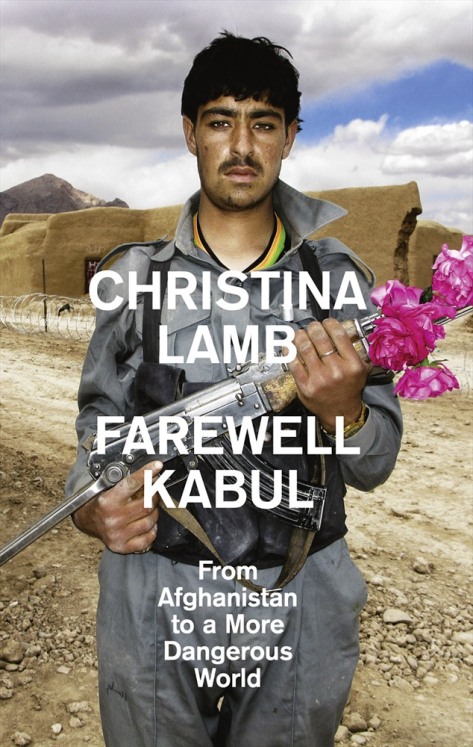
From Afghanistan to a More Dangerous World

Farewell Kabul
I’ve just finished reading Christina Lamb’s latest book ‘FAREWELL KABUL. From Afghanistan to a More Dangerous World’ and discovered that I unknowingly walked in her footsteps into Zumbalay – with much the same outcome.

The book asks just how the might of NATO, with 48 countries and 140,000 troops on the ground, failed to defeat a group of religious students and farmers? How did it go so wrong?

FAREWELL KABUL tells how the West turned success into defeat in the longest war fought by the United States in its history and by Britain since the Hundred Years War. It is the story of well-intentioned men and women going into a place they did not understand at all. And how, what had once been the right thing to do had become a conflict that everyone wanted to exit.

During my own FFUI (Find, Feel, Understand, Inform) patrols the locals I spoke with would often exasperatedly and painstakingly explain to me that the Taliban were funded by the US via Pakistan. Although this view was widespread and heartfelt I dismissed it as a distortion of the truth. Christina Lamb has forced me to re-appraise this view.

It is less a question of whether or not the US funded the Taliban via Pakistan but whether they did so knowingly, negligently or naively. Christina Lamb’s credentials as a war reporter are impeccable but Farewell Kabul is likely to spawn a number of conspiracy theories and, sadly, some of them will be true.

SPIN ZHIRA: Old Man in Helmand is available as an Amazon Kindle e-book

SPIN ZHIRA: Old Man in Helmand is the unauthorised, unvarnished and irreverent story of one man’s midlife crisis on the front line of the most dangerous district in Afghanistan where the locals haven’t forgiven the British for the occupation of 1842 or for the Russian Invasion of 1979. Of course, all infidels look the same so you can’t really tell them apart.


A touchstone of terrible realisation

OLYMPUS DIGITAL CAMERA

The summer holidays are just around the corner and I’m reminded of Harry and Alfie’s 2011 trip to Portugal with their mum:

‘MY RETURN HOME the following evening, after another long sweaty journey in the ageing Wolf, was not a triumphant one. Within hours of stepping across the threshold of our magnificent Edwardian stained glass front door with its enormous hexagonal brass pull and letter plate my spirits were thoroughly deflated.

Harry and Alfie were pleased to see me. Full of questions about my experiences with the real soldiers, wanting to know if they’d given me a shooter, not quite believing me when I told them that I’d slept outside on the ground.

Jane barely acknowledged my presence. After I’d bathed the boys and put them to bed I found myself alone in the front room. I stared at my reflection in the antique gilt‑framed mirror above the mantelpiece and knew I was in the shit. But the silent treatment didn’t last long. The following morning Jane told me she was moving out and taking the boys with her. When she explained that she’d found a cottage for rent close to the city of York, near to her parents and in the catchment area of an excellent primary school, I didn’t object. In truth the news came as a relief. I didn’t know how on earth I was going to continue to pay the mortgage on our trophy property in Dulwich.

Since it turned out that Jane was expecting me to continue to foot the bill for her extravagant lifestyle, perhaps I should not have allowed financial considerations to cloud my judgement. I shall forever regret the fact that I did not properly consider the impact of our separation on our children, Harry and Alfie. I reasoned to myself that, given I was bound for Afghanistan, it actually made sense for them to be closer to their much loved grandparents.

Both boys would later make heartbreaking appeals to me to get back together with Mummy. I would do almost anything for my children, including going to fight a war over 3,500 miles away, but I couldn’t even begin to reconcile my differences with Jane. As Alfie would explain to me, he loved Mummy and he loved Daddy, so why didn’t we love each other?

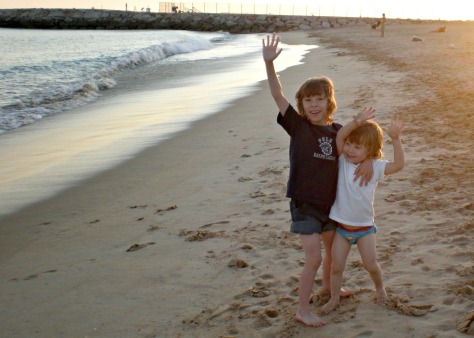
In the summer of 2011, while I was in Canada training for deployment, Jane and her parents took the boys on holiday to Portugal. In one of their holiday snaps Harry and Alfie are standing together on a golden beach at sunset. Harry has a protective arm draped over his younger brother who is dressed in just vest and underpants. Both boys are waving and smiling directly at the camera.

It’s a perfect picture but also a painful one.

In my imagination the boys are waving goodbye to me. The image became not only a visual metaphor for the possibility that I might not return from Afghanistan, but also a touchstone of terrible realisation of the sense of abandonment that I was imposing on my children, the people I loved most in the world.’

SPIN ZHIRA: Old Man in Helmand is available as an Amazon Kindle e-book

SPIN ZHIRA: Old Man in Helmand is the unauthorised, unvarnished and irreverent story of one man’s midlife crisis on the front line of the most dangerous district in Afghanistan where the locals haven’t forgiven the British for the occupation of 1842 or for the Russian Invasion of 1979. Of course, all infidels look the same so you can’t really tell them apart.

Defending the indefensible as ‘ancient custom’ is no defence at all.

Victor Barrio
The BBC reports that Matador Victor Barrio has been killed by a bull in Spain.

The bull fighting community is reported to be “distressed and very moved”  by his death and Spain’s Prime Minister, Mariano Rajoy has expressed his condolences.

While his death, any death, is tragic and my heart goes out to his grieving family, I’m personally finding it hard to feel too sorry for Victor Barrio. After all, he died doing something he loved which is better than ending your days eating mashed potato and watching endless repeats of Eastenders. I don’t fear the Reaper and when he calls, as call he must, I hope I am similarly engaged in the pursuit of something I love.

But there’s another reason why I’m finding it hard to feel too sorry for Mr Barrio. Lovers of bullfighting  defend it as an ancient art form deeply rooted in national history in much the same way as the appalling practice of bacha basi is excused as ancient custom in Afghanistan – which is no defence at all.

When the Reaper does call for me I won’t be slaughtering bulls for art or raping little boys for culture.

SPIN ZHIRA: Old Man in Helmand is available as an Amazon Kindle e-book

SPIN ZHIRA: Old Man in Helmand is the unauthorised, unvarnished and irreverent story of one man’s midlife crisis on the front line of the most dangerous district in Afghanistan where the locals haven’t forgiven the British for the occupation of 1842 or for the Russian Invasion of 1979. Of course, all infidels look the same so you can’t really tell them apart.

Is the era of ‘cautious optimism’ over?


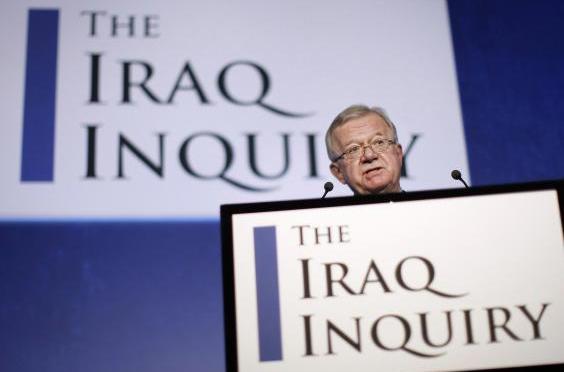
On 6 July 2016, Britain learned that it had joined the invasion of  Iraq in 2003 ‘before all peaceful options for disarmament had been exhausted’ that it had ‘sent ill-prepared troops into battle’ and had ‘wholly inadequate’ plans for the aftermath.

Of course, we knew these things already.

Despite the long wait (7 years) the huge cost (£10.4m) and incredible detail (2.5 million words) the Iraq enquiry was less revelation and more affirmation of the things we already knew to be true but dare not speak.

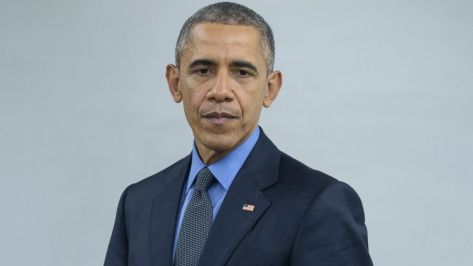
Obama

On the same day, a grim-faced President Barack Obama announced that planned US troop withdrawals in Afghanistan have been shelved, further prolonging the United States’ longest war.

The inability to end the war in Afghanistan does not come as a complete surprise either.

Way back in the spring of 2012, Major General CM Gurganus, USMC confidently asserted, ‘we are winning and the Taliban are losing’. No one really believed him. It was patently obvious that we were not fighting a simple binary war with a winner and a loser.

Later that same year Brigadier Douglas Chalmers, the senior British Commander in Helmand was less assertive and spoke of ‘cautious optimism’ for the future.

Of course, both men were talking bollocks. And I suspect they knew it too.

Just as in Iraq, US led, British backed military intervention in Afghanistan has been disastrous. Many of the findings of the Chilcot report, particularly with regard to post-conflict planning and reconstruction, can be equally applied in Afghanistan.

How did we fail to learn these lessons?

I believe it is because we have a culture of shooting the messenger that pervades both the American and British  Armed Forces. We are so focused on success that we cannot countenance failure. To maintain morale and careers it becomes necessary to spin failure into success, telling people what they want to hear rather than what they need to know. This blindness to failure prevents us from learning from failure.

The language of ‘cautious optimism’ has been very costly in Iraq and Afghanistan.

Perhaps, after Chilcot, we are now ready to learn this lesson.Spin Zhira header blurb for website v1.3SPIN ZHIRA: Old Man in Helmand is available as an Amazon Kindle e-book

SPIN ZHIRA: Old Man in Helmand is the unauthorised, unvarnished and irreverent story of one man’s midlife crisis on the front line of the most dangerous district in Afghanistan where the locals haven’t forgiven the British for the occupation of 1842 or for the Russian Invasion of 1979. Of course, all infidels look the same so you can’t really tell them apart.