Tag Archives: Old Man in Helmand

Measuring Outcomes in Afghanistan


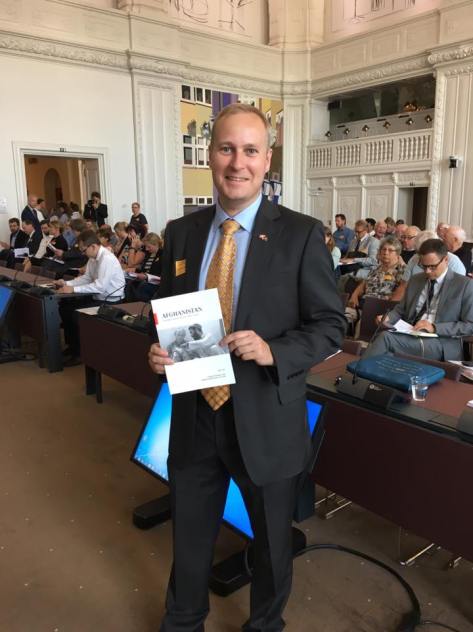
13315746_10154273554429294_6124981740034258877_n

My friend Niels Vistisen presented his co-authored report Afghanistan, Lessons Identified 2001 – 2014 to the Danish Parliament today. Niels was Political Adviser (POLAD) to Salim Rodi, the Governor of Nahr-E-Saraj in 2012. I’m most struck by the report’s observation: ‘It became increasingly obvious that even though ISAF won all of the battles, NATO was not winning the war.’

The Royal Danish Defence College was tasked to ‘investigate the stabilisation efforts and military operations in Afghanistan to establish how they were integrated and concerted and assess where possible their outcomes in relation to the indicators of progress, i.e. security, governance and development.’ 

I saw very little evidence of integration of effort in Afghanistan and this was a constant source of frustration:

“The clearance op would stir up a hornets’ nest, making Yakchal a dangerous and unpleasant place to live in the process, but there was no plan to hold the ground for more than a few days once it had been cleared. The insurgents would quickly return once we had departed.

When I briefed the DST members on the plan they looked at me blankly. I had naïvely assumed they would want to exploit the temporary security bubble our presence would create to deliver some positive stabilisation effect. A polio vaccination programme perhaps, a shura to engage with their elected representatives, some infrastructure project such as dredging or repairing the complex irrigation system that was the only source of water so far from the Helmand River.

Anything that might add some truth to the fiction that a better life lay ahead with GIRoA.

Bruno, the DST leader looked confused, but some of the other team members visibly flushed with anger and stamped out of the briefing room. Bruno explained: ‘We don’t really get involved with what the military are doing and have our own projects and priorities.’ I’d managed to seriously upset some of his colleagues by daring to suggest that we might work together for the common good.

So much for the ‘Comprehensive Approach’ as defined in the joint doctrine manual on ‘Security and Stabilisation’. As with so many of the doctrine manuals I’d read, the authors appeared to have gone to great efforts creating complex definitions to describe relatively simple concepts. In this case:

‘The comprehensive approach is broader than cross‑government, it is also a multi‑agency and usually a multinational response. Mutually‑supporting cross‑departmental and multi‑agency effort should enable comprehensive tactical activity to deliver overwhelming campaign effect. The military will set the security conditions and lead on aspects of Security Sector Reform (SSR) such as military capacity‑building. Civilian state and non‑state institutions lead on: governance; engagement and reconciliation; police and justice sector reform; restoration of basic services and infrastructure; economic and financial development; and longer‑term social and infrastructure development.’

In 1933, Colonel (later Field Marshal) Irwin Rommel stated: ‘The British write some of the best doctrine in the world; it is fortunate that their officers do not read it.’

I’d read a lot of doctrine as I’d prepared for Afghanistan and couldn’t agree with his assessment of the quality. Much of it seemed impenetrable and verbose to me. But at least I had read it. It appeared that my colleagues in the DST had not.

This was to be a recurring theme of my time in Afghanistan. Whenever we mounted a major operation I would appeal to the DST to follow up with some governance, engagement or infrastructure activity to deliver overwhelming campaign effect, but this was always considered to be too difficult or not a priority for them. Even though some of the DST members were to become my friends, by the end of my time in Helmand I was barely able to conceal my contempt for their organisation’s woeful contribution to the mission.”

Although Niels’ report does not mention it, the most obvious outcome in relation to the indicators of progress is staring us all in the face: The Taliban control most of rural Helmand Province. All of the contested ground over which British and Danish troops fought is now in the hands of the Taliban and, if the current reports from Afghanistan are accurate, Helmand is ‘on the verge of collapse’ with the towns of Gereshk and Lashka Gah under siege.
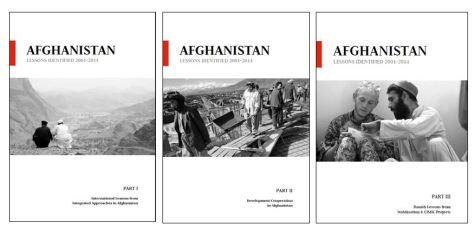
Danish Afghan Report


SPIN ZHIRA: Old Man in Helmand is available as an Amazon Kindle e-book

SPIN ZHIRA: Old Man in Helmand is the unauthorised, unvarnished and irreverent story of one man’s midlife crisis on the front line of the most dangerous district in Afghanistan where the locals haven’t forgiven the British for the occupation of 1842 or for the Russian Invasion of 1979. Of course, all infidels look the same so you can’t really tell them apart.
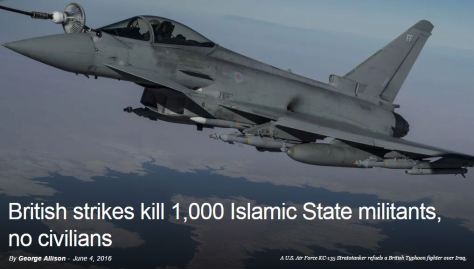

British strikes kill 1,000 IS militants.

British Typhoon

George Allison reports for the UK Defence Journal – motto ‘Impartial and Current’ (snigger) –  that British strikes have killed 1,000 Islamic State fighters in Syria and Iraq since bombing began with zero civilian casualties.

British strikes kill 1,000 Islamic State militants, no civilians

I don’t doubt the RAF take great care to avoid civilian casualties but war is an ugly business and we’ve heard this kind of thing before. In fact, little has changed since 1758 when Samuel Johnson observed: ‘Among the calamities of war may be justly numbered the diminution of the love of truth, by the falsehoods which interest dictates and credulity encourages.’

It was much the same in Afghanistan and I can’t help but wonder at the assessment criteria which judged those 1,000 to be IS fighters.

“According to an October 2011 study by the Afghanistan Analysts Network simply being a facilitator was enough to be assigned a codename and subjected to priority effects. The report examined the effectiveness of controversial ISAF night raids aimed at decapitating the Taliban on the battlefield by removing their commanders. This was a tactic much favoured by General Petreus who had replaced McChrystal after his motormouth got the better of him. It revealed that the words leader and facilitator were sometimes used interchangeably in ISAF press releases, although facilitator could just be someone whose house an insurgent group was thought to have used.

The study also revealed that these night raids were not exactly a precision tool. For every leader killed eight other people also died. Since ISAF was very careful not to kill civilians I presumed these other eight must all be insurgent facilitators. American Special Forces were particularly adept at avoiding civilian casualties.

In the first few weeks of our tour I’d been approached by a US Navy Seal team running a Village Stability Operation¹ in Parschow, an area just south of Main Operating Base (MOB) Price. The Seals had been in contact with the enemy when they witnessed a young boy being callously gunned down by insurgents as they fled the scene. The Seals were keen to be first to the truth with the news and wanted to use the MOB Price radio to communicate the brutal and heartless disregard for human life which the Taliban had displayed.

Since isolating the insurgents from the population is a cornerstone of counter‑insurgency operations, this seemed like a good idea to me and I readily agreed, asking only that the Seals provide me with a few more facts before I could produce a transcript. I also explained that I would need approval from Task Force Helmand for broadcast, which needn’t be a problem but was a factor in determining the speed with which we could get the message into the public domain.

The Seal team leader seemed reluctant to submit to a British chain of command but promised to get back to me with more details. When he returned a short while later, he revealed that it might in fact have been a stray American round that tragically killed the boy after he was caught in crossfire. The incident, as with all incidents involving civilian casualties, would now be subject to an internal review. All reporting on the subject would be postponed until this had been completed. I inwardly breathed a sigh of relief that I’d not been tempted to step outside the Task Force Helmand (TFH) reporting chain in order to assist the Seals. In the light of these new details it would have shown appallingly poor judgement on my part which, quite rightly, would have cost me my job.

The next morning I again bumped into the Seal team leader outside the DST office. He cheerily informed me that there was no longer any need for an enquiry. The casualty was not after all an innocent young boy but a baby‑faced Talib fighter whose body had been recovered along with an AK47 rifle. He now wanted me to report a great victory in which ISAF had protected the people of Parschow from vicious insurgents, one of whom had been killed in the battle. Promising to look into it, I made myself scarce.”

SPIN ZHIRA: Old Man in Helmand is available as an Amazon Kindle e-book

SPIN ZHIRA: Old Man in Helmand is the unauthorised, unvarnished and irreverent story of one man’s midlife crisis on the front line of the most dangerous district in Afghanistan where the locals haven’t forgiven the British for the occupation of 1842 or for the Russian Invasion of 1979. Of course, all infidels look the same so you can’t really tell them apart.
¹Village Stability Operation (VSO). A US Special Operations Force initiative the aim of which was to provide enhanced security, governance, and development in strategically important rural areas critical to the Afghanistan campaign but beyond the effective reach of the Afghan government and U.S. conventional forces. It was perhaps insightful that the Parschow VSO was just 3 km due south of Gereshk, the seat of GIRoA District Governance and home to the District Police Headquarters, the main Afghan National Army base and ISAF’s Main Operating Base Price yet still beyond the reach of the Afghan government and US conventional forces.

WORKING THE ODDS ON EVEREST

Everest

Am I the only person who struggles to feel sympathy when someone dies on Everest?

Alex Proud writes from the other side of the argument. He dreads disaster and fears the Reaper. We both like to work the odds but when they drop below one in a 100 he tends to think ‘you’re f—king mad to do whatever it is you’re doing’ while I think things are just beginning to get interesting.

But I don’t have a death wish, far from it. I love life and try to live it to the full. I think our society has got things badly wrong when it comes to death. When a Palace flunky offered Prince Philip his condolences at the loss of a friend he retorted by saying ‘he’s not lost, he’s dead’. It’s an anecdote that illustrates our denial. We cloak death in the language of ‘loss’ or ‘passing’. We dare not speak its name and imagine we will live forever. In the pursuit of this impossible outcome we have sacrificed quality in the pursuit of quantity. We wrap ourselves in health and safety legislation and cling on to life long after there is any joy left in living.

This is not a life I look forward to. I have no desire to be a burden to my children or the State. I do not plan to spend my final years eating mashed potato and watching endless repeats of Eastenders.

I accept that in the pursuit of life I will most likely die ‘before my time’, but what does that mean? In Helmand Province life expectancy is 44 and despite being one of the most violent places on the planet, pregnancy rather than insurgency is the biggest killer. So by Helmandi standards I’ve lived a very good life and I’m already on borrowed time.

When my father died at the age of 79 I didn’t mourn his death, I bought champagne and celebrated his life. I hope my own sons will feel able to do the same. When the Reaper calls, as he inevitably will, I hope he finds me on a snow-covered mountain doing something frowned upon by the health and safety executive.

Alex Proud will not be sympathetic.

SPIN ZHIRA: Old Man in Helmand is available as an Amazon Kindle e-book

SPIN ZHIRA: Old Man in Helmand is the unauthorised, unvarnished and irreverent story of one man’s midlife crisis on the front line of the most dangerous district in Afghanistan where the locals haven’t forgiven the British for the occupation of 1842 or for the Russian Invasion of 1979. Of course, all infidels look the same so you can’t really tell them apart.



Turn to Starboard Round Britain Challenge

13312598_884282255028329_776894522100906569_n
Steven Price Brown, or PB, called me a ‘fucking cunt, Sir’ when we first met. He was feeling aggrieved as I’d just fallen on him from a great height. I can’t say I blame him. He’s now sailing around Britain in a leaky boat with a dodgy engine and you can follow his progress and that of his shipmates on his blog: Turn to Starboard. Here’s how I described that first encounter:
 
“As soon as Ron and his team arrived I briefed him on the plan and set off back down the bund line towards the river with Ninety, PB and Double A in hot pursuit. I hadn’t had a chance to brief them yet, but they all knew that wherever I was going they were going too. I could hear Delta blazing away behind us while Ron bellowed at them to conserve ammunition and slow their rate of fire.
The berm afforded limited cover which meant we could only run bent double but, despite this, we made quick progress until the bund petered out about ten metres short of the river bank. We would need to break cover and dash these last few metres. Stopping just short of the open ground, I quickly explained to the lads my plan and their individual roles. I could see that Ninety was made up to be joining me for the final assault. Then I explained we should individually make the dash across to the cover of the river bank. PB set off first. As soon as he disappeared Double A followed, then Ninety and I in rapid succession.
The river bank was about six feet above the level of the water and, in my haste to reach cover, I simply launched myself over the edge into thin air. The lads had all done pretty much the same thing and I landed on top of a heap of bodies in the river. Being the first one to cross the open ground, PB was now at the bottom of this pile and from the look on his face he wasn’t particularly enjoying the experience. At 43, PB was probably one of the oldest, if not the oldest, private soldier in the British Army. His paper round as a child must have been a hard one and he wore every single one of those 43 years in the lines on his face. Beneath this craggy exterior was a man of steel; PB was easily fitter than most lads half his age and was basically unbreakable. Providing a soft landing for three fully laden soldiers might not have been at the top of his ‘to do’ list that morning but it still wasn’t a big drama for him.
Given that I’d fallen on him from a great height, I was prepared to overlook the fact that he’d just called me ‘a fucking cunt, Sir’. As far as I was concerned, PB was gleaming.”
13254355_879042635552291_3568067238125568678_n

SPIN ZHIRA: Old Man in Helmand is available as an Amazon Kindle e-book

SPIN ZHIRA: Old Man in Helmand is the unauthorised, unvarnished and irreverent story of one man’s midlife crisis on the front line of the most dangerous district in Afghanistan where the locals haven’t forgiven the British for the occupation of 1842 or for the Russian Invasion of 1979. Of course, all infidels look the same so you can’t really tell them apart.
Book Swap

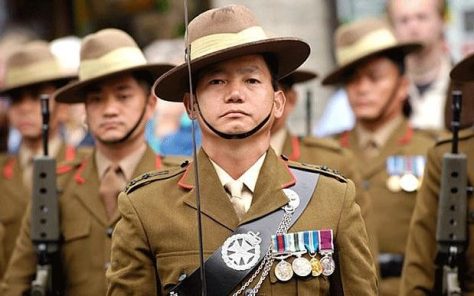
Gurkhas

10 things no one tells you before you join the Gurkhas

Johnny Fenn, former Gurkha Officer turned professional photographer has written an article for The Telegraph. He also has a new book out – Life and Light in the Middle Hills – and we’ve agreed to do a book swap.

I think I may be ahead in this particular barter deal.

SPIN ZHIRA: Old Man in Helmand is available as an Amazon Kindle e-book

SPIN ZHIRA: Old Man in Helmand is the unauthorised, unvarnished and irreverent story of one man’s midlife crisis on the front line of the most dangerous district in Afghanistan where the locals haven’t forgiven the British for the occupation of 1842 or for the Russian Invasion of 1979. Of course, all infidels look the same so you can’t really tell them apart.

60 Troops Die In Helmand

afghansolider-31-may-16

MPs Slam War Strategy After 60 Troops Die In Helmand

Wednesday, 01 June 2016 16:29
Written by Karim Amini

“Helmand is on the verge of collapse; 58 people were martyred during a single night.”

Karim Amini reports for Tolo News that the Taliban have launched a fresh offensive against hard-pressed Afghan security forces in Helmand with fighting on multiple fronts in the volatile districts of Nad-e-Ali, Gereshk, Marjah, Nahr-e-Saraj and Khanshin.

Worryingly I have been unable to reach my contacts in the district to corroborate these reports. My thoughts are with them.


Barclays reaches out to veterans

Rupert Stevens

Barclays reaches out to veterans moving into civilian world – Coventry Telegraph

It’s good to see Rupert Stevens making the headlines. Rupert was our Adjutant in Afghanistan – a key figurehead in any Regiment and the Commanding Officer’s right hand man. I owe him big because he delayed his own R&R so that I could return to the UK in time for Alfie’s birthday, but it was his very low opinion of the RAF that I remember most:

“I RETURNED TO the barracks to find a group of soldiers standing around their bergans, like so many girls at a school disco, quietly chatting and smoking, their cigarettes glowing in the dark as they patiently waited for the transport to RAF Brize Norton. A voice addressed me from the shadows:

‘Good of you to make it, Chris.’

It was the Adjutant, Captain Rupert Stevens. Rupert had been one of the first Grenadiers I’d met almost two years ago and although he’d always been supportive of my ambition to mobilise with the battalion, that didn’t mean he was averse to a bit of squaddie banter. He informed me that our trooping flight was scheduled for 07.00 the following morning but as this was ‘Crab Air’, army slang for the Royal Air Force, this was not a departure time but a ‘no move before’ time. In his opinion it was anyone’s guess when we might eventually take off.

Rivalry and deep cultural differences between the armed services ensured that Rupert, like all self‑respecting soldiers, did not have a kind word to say about the RAF. Still there was some truth behind his comments. The RAF was trying to maintain a busy air bridge between the UK and Afghanistan using an ageing fleet of Lockheed Tristar aircraft. These had first come into service in 1978 as commercial airliners operated by Pan American Airways who subsequently sold them to the RAF shortly after the Falklands War.

After 34 years of service the Tristar was showing its age and, a bit like myself, was only just about fit for purpose.

Troops had become resigned to long delays in the journey to and from Afghanistan. It’s also fair to say that the RAF, unlike the aircraft’s original owner, is not a customer focussed organisation and puts little thought into the welfare of its passengers. We would all spend many hours experiencing RAF hospitality and it was never enjoyable. Disparaging comments not only helped to pass the time but also managed expectation.

Some months later a much publicised visit to Afghanistan by James Blunt and Catherine Jenkins was cancelled after the Tristar in which they were travelling was forced to abort and return to Cyprus, not once but twice, with first an air leak and then a problem with the undercarriage. James Blunt, himself a former soldier, was not impressed and wrote an uncomplimentary article in The Telegraph which delighted the rank and file but angered the top brass, who disputed his claims of military incompetence. For Rupert, who had been tasked with organising this visit and who had boasted for days about his self‑appointed role as Catherine Jenkins’ personal assistant, this would only serve to confirm his already very low opinion of the RAF.

Ironically, despite his obvious frustration, the RAF had actually done James a favour. So far as I could tell, Rupert had invested considerable time and effort preparing a detailed and comprehensive visit programme for Catherine in which he intended personally to take care of her every need and desire. By contrast he’d assumed ‘Blunty’ would doss down in the honking transit accommodation and sort himself out.”

SPIN ZHIRA: Old Man in Helmand is available as an Amazon Kindle e-book

SPIN ZHIRA: Old Man in Helmand is the unauthorised, unvarnished and irreverent story of one man’s midlife crisis on the front line of the most dangerous district in Afghanistan where the locals haven’t forgiven the British for the occupation of 1842 or for the Russian Invasion of 1979. Of course, all infidels look the same so you can’t really tell them apart.

Hell hath no fury

Johnny Depp

Johnny Depp and Amber Heard in marriage split – BBC News

Amber Heard files for divorce days after Depp’s mother dies.

Hell hath no fury like a woman scorned. I should know:

“ON 11th JULY 2012, some six months after I’d departed the UK, I finally received a communiqué from Jane. Not a message from Jane herself but an email from a Leeds based law firm which stated:

‘As you may be aware we have been contacted by Jane Harris in connection with the breakdown of your marriage, Indeed we are instructed that the marriage is at an end and we are to commence divorce proceedings against you in the near future. It would be helpful if you could provide me with an address to which the papers can be sent. The divorce will be based upon your unreasonable behaviour.’

Although, with hindsight, it was pretty obvious that Jane and I were heading for a divorce I was shocked and confused by this news. We had previously agreed that we would wait until I returned from Afghan before deciding our future as man and wife. By that time we would have lived apart for two years. Knowing that Jane already had a new boyfriend, I’d promised her that I would consent to a decree being granted if this was what she wanted.

This not only left the very slim possibility of reconciliation, but also ensured that Jane would receive a widow’s pension and other benefits from the army in the event of my death. I didn’t understand why Jane had so suddenly and dramatically changed her mind, but I could do little more than wait to learn of my unreasonable behaviours from the York County Court.

A few days later I received a further email from her solicitors to which they had attached a copy of the court papers. Internet access in MOB Price could be maddeningly slow and was confined to 30 minute sessions on the computers in the welfare cabins. I waited several long minutes as the file downloaded but then had no means of copying or printing the eight page document, which was written in a legalese with which I was not familiar. Hastily scribbling the main headings onto a bluey – the free aerograms supplied to troops on active service – I tried to make sense of the petition.

Part 6 the Statement of Case outlined my unreasonable behaviours:

  1. Over the course of the last 12 months of the marriage, on occasions far too numerous to specify there were arguments between the Petitioner and the Respondent. More annoyingly for the Petitioner when there were not arguments there were prolonged periods of silence causing a very unpleasant atmosphere within the matrimonial home. The respondent could sit for hours without speaking.
  2. Over the course of the last 12 months of the marriage the Respondent was controlling and selfish.
  3. The Respondent would take issue with the Petitioner for boiling more than one cup of water in the kettle and wasting electricity.
  4. The Respondent would take issue with the Petitioner for using the vacuum instead of a carpet sweeper.
  5. The Respondent would go on 2 or 3 skiing holidays a year, without inviting the Petitioner nor the children, causing the Petitioner upset.
  6. The Respondent would complain that house hold paper work remained unfiled.
  7. The Respondent demanded the running of the property in his own way and was derogatory towards the Petitioner when his own way was not followed.
  8. The Respondent on one occasion threw a pack of BBQ skewers at the Petitioner following the Petitioner having made a cooking suggestion.

Jane was right, of course, everything she’d outlined in her divorce petition was true, I was guilty as charged. But perhaps her statement of case didn’t quite tell the whole story.

We had indeed argued on occasions far too numerous to mention, although these arguments had principally been about Jane’s refutation of our precarious financial situation, or about her point‑blank refusal to rein in her expenditure, describing this to me as demeaning. I had indeed insisted on running the property and our budgets in my own way, but only after Jane spent the £3,500 I’d earmarked for school fees on her wardrobe. I had enquired on numerous occasions why she refused to use the energy saving ‘one cup’ kettle my father had kindly given us for Christmas, although I suspected I knew the reason why. I did recall sitting for hours in stunned silence after Jane had revealed to me that she’d voted in local elections for a party of the right most commonly associated with shameful immigration policies and shaven‑headed, tattooed thugs. And yes, I had complained about unfiled paperwork and I had thrown a pack of BBQ skewers.

There was also the question of my excessive skiing. I’d declared my passion for skiing long before we married and we had been on several skiing holidays together. But Jane did not share my love of snow covered mountains and never took to the thrill of descending their gelid gradients. When she informed me that she no longer wished to go on skiing holidays I hadn’t understood this to mean that I should no longer go skiing either.

If I were splitting hairs I might have argued that I had merely asked Jane to remind our housekeeper to use the carpet sweeper, rather than the vacuum, on our expensive Persian rugs. To the best of my knowledge, Jane neither vacuumed nor swept.

However, there was one further item that I could not accept. My hand shook as I hurriedly scrawled the final statement onto the bluey:

  1. The respondent would become very aggressive towards the Petitioner following occasions when the Petitioner merely made simple suggestions or comments. The Petitioner would view the actions of the Respondent during such periods of time as borderline abuse.

I couldn’t accept the allegation of aggression and abuse. It simply wasn’t true and just rereading the accusation in my own illegible handwriting on the flimsy airmail paper felt like a betrayal that brought tears to my eyes. I hadn’t expected Jane to lie. But perhaps I should not have been surprised by the falsehoods which interest dictates and credulity encourages.

Much later I would draw the conclusion that Jane must have been schooled by her solicitors on this point. She would never produce any evidence to substantiate these terrible claims and was always very careful never directly to accuse me of abusive or aggressive behaviour, stating instead that this was her opinion of my behaviour. Over time I think Jane came to believe her own rhetoric, and would always default to this line whenever we had a disagreement.

It seemed that Jane and I were now at war and she had achieved Foxtrot Triple Tango. Stuck as I was on the front line of the most dangerous district in the most dangerous province of the most dangerous country on the planet, with just 30 minutes of low speed internet connectivity per session in the MOB Price internet cabins, there was precious little I could do about it.”

SPIN ZHIRA: Old Man in Helmand is available as an Amazon Kindle e-book

SPIN ZHIRA: Old Man in Helmand is the unauthorised, unvarnished and irreverent story of one man’s midlife crisis on the front line of the most dangerous district in Afghanistan where the locals haven’t forgiven the British for the occupation of 1842 or for the Russian Invasion of 1979. Of course, all infidels look the same so you can’t really tell them apart.

Mad as a box of frogs

Sima Kotecha reports for the BBC  that MP’s on the Defence Select Committee have ruled that anti-malarial drug Lariam should be the “drug of last resort” for UK troops.

Lariam should be drug of last resort for troops, MPs say – BBC News

Committee chairman Dr Julian Lewis  concludes: “there is neither the need, nor any justification for continuing to issue this medication to service personnel.”

The MOD’s insistence on dispensing a drug known to induce hallucinations, aggression and psychotic behaviour to those entrusted with instruments of death and destruction, particularly when alternatives were available, always struck me as – well – nuts:

“As improbable as it may seem, and despite years of repeated warnings, the MoD issues Lariam to troops as its anti‑malarial prophylactic of choice. It’s a drug that, according to the manufacturer, ‘may induce potentially serious neuropsychiatric disorders including hallucinations, psychosis, suicide, suicidal thoughts and self‑endangering behaviour’. The MoD, apparently unconcerned by this warning, doggedly refuses to switch to an alternative. Even after the US Army introduced a ban, and UK Service Chiefs queued up to criticise the policy, the MoD insisted on its continued use.

Major General Julian Thompson, who commanded 3 Commando Brigade in the Falklands War, came to the conclusion this was because ‘the MoD has a large supply of Lariam, and some chairborne jobsworth has decreed that, as a cost‑saving measure, the stocks are to be consumed before an alternative is purchased’.

My personal conclusion is slightly at odds with the Major General’s. It seems to me that the MoD mandarins continue to risk the mental health of their soldiers because they are themselves as mad as a box of frogs.

All those who served in the Iraq and Afghan wars will have been issued Lariam under the generic name mefloquine. Nearly 1,000 UK service personnel are known to have been admitted to psychiatric hospitals, or treated at mental health clinics, as a result of being prescribed the drug. In 2012, more British veterans of the two conflicts took their own lives than soldiers died fighting the Taliban in Afghanistan over the same period.

mefloquine-tablet-250x250

It is a terrible coincidence that the side effects of Lariam closely resemble those linked to Post Traumatic Stress Disorder (PTSD). Some experts believe that Lariam amplifies the effects of PTSD and the British Army now faces a mental health catastrophe. The Ministry of Defence, on the other hand, continues to maintain that the incidence of mental health issues in army personnel is broadly in line with the general population, and continues to prescribe mefloquine.

On the night of 11th March 2012, US Army Staff Sergeant Robert Bales murdered 16 Afghan civilians in Kandahar Province in a brutal and apparently motiveless attack. Bales could not explain his actions and admitted ‘There’s not a good reason in this world for why I did the horrible things I did.’

Bales’ killing spree was incomprehensible not only to him but also to everyone in Task Force Helmand. Threat levels were raised in anticipation of retaliatory attacks, and we all speculated on the impulse that led him to leave the security of his patrol base before sadistically slaying innocent women and children. While we could find no rational explanation, the makers of Lariam thought they knew the answer.

A month after the mass killings Roche, who manufacture Lariam and claim on their website to be ‘passionate about transforming patients’ lives’, notified the US Food and Drug Administration that Bales had been given the anti‑malarial drug (in direct contradiction to US military rules) and ‘developed homicidal behaviour and led to Homicide killing 17 [sic] Afghanis’.

Although it never occurred to me that mass murder could be linked to the seemingly innocuous little white tablets with which I’d been issued, I’d already stopped taking them. No one had counselled me on their potential side effects but they’d caused me to feel so unwell that I’d decided I would be better off with malaria.”

Roche have agreed with the committee’s findings but, as if to confirm my deep held suspicions that they are, indeed, as mad as a box of frogs the MOD are still not listening, stating instead:

“We have a duty to protect our personnel from malaria and we welcome the committee’s conclusion that, in some cases, Lariam will be the most effective way of doing that.”

SPIN ZHIRA: Old Man in Helmand is available as an Amazon Kindle e-book

SPIN ZHIRA: Old Man in Helmand is the unauthorised, unvarnished and irreverent story of one man’s midlife crisis on the front line of the most dangerous district in Afghanistan where the locals haven’t forgiven the British for the occupation of 1842 or for the Russian Invasion of 1979. Of course, all infidels look the same so you can’t really tell them apart.

Stuff not Sh*t

_45541279_steveyabsley02

It was great to meet and chat with Steve Yabsley today on BBC Radio Bristol. To stop listeners from choking on their lunch he deleted my expletive and replaced it with the word “stuff”.  You can listen to Steve’s interview at the link.

BBC Radio Bristol – Steve Yabsley, Steve Yabsley

His producer, Becky Walsh is an author and life coach and has written a number of books including:

You do know: Learning to act on intuition instantly.

She is an expert on guiding people through a mid-life crisis. If only we’d met three years ago she might have saved me the trouble of writing my own book. I left the studio totally in awe of her and with a bit of a crush.

SPIN ZHIRA: Old Man in Helmand is available as an Amazon Kindle e-book

SPIN ZHIRA: Old Man in Helmand is the unauthorised, unvarnished and irreverent story of one man’s midlife crisis on the front line of the most dangerous district in Afghanistan where the locals haven’t forgiven the British for the occupation of 1842 or for the Russian Invasion of 1979. Of course, all infidels look the same so you can’t really tell them apart.