Tag Archives: Spin Zhira

Fantastical and mind-boggling

David CameronDavid Cameron calls Nigeria and Afghanistan ‘fantastically corrupt’ in conversation with the Queen.

via David Cameron calls Nigeria and Afghanistan ‘fantastically corrupt’ – BBC News

As I discovered firsthand, The Prime Minister is right. Afghanistan is fantastically, mind-bogglingly corrupt:

“At the top of the list was the District Governor (DG), Salim Rodi. In addition to his role as the official representative of the people of Nahr‑E‑Saraj District, like almost all appointees of the Government of the Islamic Republic (GIRoA) he was also heavily implicated in Helmand’s narcotics industry, believed to be responsible for around 75% of global opium production.

The pressures of high office in the violent international opium business, and the even more violent business of Helmandian politics, had taken their toll and he was also a heavy drinker. Rather like Jeffrey Bernard, only with perhaps greater justification, he was frequently too unwell to perform his gubernatorial duties.

Neither his drinking nor his role in the opium trade were condoned in any of the 48 copies of the Qur’an inadvertently reduced to ashes in the Bagram incinerators. Nonetheless the Governor was outraged at the news, although he grudgingly accepted our heartfelt apology.

The DG would later claim that he personally intervened to quell a riot when ‘hundreds’ of outraged citizens marched through Gereshk in protest. Since none of our ground units or reconnaissance assets reported any unusual public gatherings I concluded that the DG was extemporising. It seemed more likely to me that having failed to foment a riot himself, perhaps because he’d been too drunk at the time, he was attempting to spin his lack of incitive powers to his advantage.

Next on the list was the District Chief of Police, the appropriately abbreviated D‑CoP, Ghullie Khan. Like his boss the Governor, the D‑CoP was predictably involved in the narcotics business. To supplement this income he also used the Afghan Uniformed Police (AUP) department he commanded to collect illegal taxes from local citizens. There were a number of ISAF apologists who defended this unlawful activity as ‘culturally normal’. I even read a paper on the subject.

Personally, I was deeply sceptical of this point of view. The truth was that ISAF seemed powerless to prevent the endemic corruption that pervaded every level of the AUP, and not a little ashamed that the primary source of these illegal taxes was a levy on the use of the main highways that bisected the district – all of which had been funded at great expense with international aid.

No one in ISAF was really sure how much the illegal taxation business was worth in Nahr‑E‑Saraj but it wasn’t petty cash. Ghullie Khan had previously been a senior police officer in the neighbouring district of Sangin. He had been removed from this post after an ISAF investigation revealed that he’d been sodomizing little boys there. In the wake of this scandal his boss, Nabi Elham – the Provincial Chief of Police – naturally promoted him to be top cop in Nahr‑E‑Saraj, although it was rumoured that he’d first demanded a bribe of half a million US dollars.

There were ISAF papers defending paedophilia and bribery as culturally normal activities too, although I didn’t waste any time reading them. Culturally normal or not, I reckoned that the citizens of those countries that had helped to fund the district’s new highways would be dismayed to learn that they were now being used to line the pockets of a known pederast, drug baron and all round bad guy.

Ghullie’s favourite son, Zaibiullah was a chip off the old block and had followed his father into the AUP. When a local shopkeeper failed to pay his taxes on time he tied his arms and legs together and drowned him into the Nahr‑E‑Buhgra canal to teach him a lesson. Such was Zaibiullah’s intellect that it was quite possible to imagine him warning the drowning man that next time he failed to pay Zaibiullah would put a bullet in his head.

It was just as possible to imagine some obscure ISAF department publishing a paper defending drowning as a culturally normal method of deterrence in much the same way that waterboarding was a culturally normal interview technique in the United States.”

SPIN ZHIRA: Old Man in Helmand is available as an Amazon Kindle e-book

SPIN ZHIRA: Old Man in Helmand is the true story of one man’s midlife crisis on the front line of the most dangerous district in Afghanistan where the locals haven’t forgiven the British for the occupation of 1842 or for the Russian Invasion of 1979. Of course, all infidels look the same so you can’t really tell them apart.

Now with Gaffer Tape

V6_BW_landscape2 with tape

In order to satisfy social media censors, SPIN ZHIRA: Old Man in Helmand now comes with Gaffer tape.

Spin Zhira Content Rating (and phallic imagery)

SPIN ZHIRA: Old Man in Helmand is available as an Amazon Kindle e-book

SPIN ZHIRA: Old Man in Helmand is the true story of one man’s midlife crisis on the front line of the most dangerous district in Afghanistan where the locals haven’t forgiven the British for the occupation of 1842 or for the Russian Invasion of 1979. Of course, all infidels look the same so you can’t really tell them apart.


Phallophoric celebration

V6_BW_landscape2

The image adorning the front cover of my SPIN ZHIRA notebook has drawn a flurry of comments – and the scrutiny of the censors.

“DURING THE FEW days I’d been away at Clifton, I discovered that in my absence someone had ‘cocked’ the notepad I’d been foolish enough to leave in plain sight on my desk.

Cocking was an obsession in the headquarters, a symptom of the sexual repression under which we all laboured. Both British and Danish commands imposed a strict no sex rule in MOB Price, which for the most part was observed. This abstinence was not the result of a commendable adherence to military discipline. Had an opportunity to engage in sexual congress presented itself I’m pretty certain that most of my colleagues, like me, would have set aside all considerations of military discipline and good order – but opportunity did not present. Price was a predominantly male, heterosexual community most of whom had wives or girlfriends waiting for them back home.

Sex, or the lack of it, was a constant preoccupation. So much so that at one of our decompression briefings in Cyprus at the end of our tour a female officer from the Royal Army Chaplains Department felt it necessary to remind us that sex involves two (or possibly more) people. By then I could hardly wait.

For the dozen or so women in Price, mostly medics and dog handlers, life in this sexually charged, testosterone fuelled environment must have been a minefield. On one occasion a female reserve officer was admonished for running wearing running shorts. This came to the attention of the chain of command who deemed it dangerously erotic. She was ordered to cease and desist immediately. In her case I had to admit they had a reasonable point, but the officer in question was incensed. When she came to seek my counsel it seemed inappropriate to compliment her on the comeliness of her gluteus maximus, so instead I offered a sympathetic ear, and tried to impress upon her the uncertain benefits of voluminous army issue shorts.

For men at their sexual peak – and even for those of us who had already passed that particular milestone – this enforced abstinence inevitably had its frustrations which were expressed in a number of ways. Cocking was one of them.

As far as I am aware this is an exclusively male obsession and involves the covert drawing of phallic imagery. This is nothing new of course. Such representations have been found dating back to the Ice Age around 28,000 years ago, and appear in many ancient cultures and religions. But the art reached new heights in MOB Price. Penis imagery would mysteriously appear on notebooks, notice boards, signage, PowerPoint presentations and operational staff work. An unusual geographical feature to the north‑east of PB Clifton was even referred to on our maps as ‘cock and balls’.

On one occasion I attended a packed briefing session in which a senior officer scribbled a note intended for Colonel James, who was sitting across the room, and handed it to the man next to him to pass down the table. By the time it reached its destination it had passed through the hands of a dozen or so officers and warrant officers, many of whom had surreptitiously cocked it. Although it was impossible to overlook the images with which it was now adorned, Colonel James accepted the note without so much as a raised eyebrow.

The towering penis that had been drawn on the front cover of my notebook was magnificent. It was a detailed and anatomically precise representation depicting an erection I’d have been justifiably proud of in my twenties and could only dream about in my forties. Phallic imagery varied considerably according to the imagination of the artist. I noticed, for example that Tom’s notebook had been illustrated with a lovingly drawn image of Winnie the Pooh being improbably penetrated by his diminutive sidekick, Piglet.

Judging from their absurdly oversized erections, which more closely resembled ancient Greek and Roman depictions of the deity Priapus than the sketches of AA Milne, they were both clearly enjoying the experience in a way that their creator had never intended.

Oh, D-D-Dear! said Piglet.

Back in civvy street, probably even back in barracks in the UK, Victorian prudishness and political correctness would not have tolerated phallic observance of this nature. HR departments would be called in, enquiries held, perpetrators reprimanded or even sacked. But in MOB Price phallophoric celebration of the Lingam, and to a lesser extent the Yoni, went unchecked.

The sexual health nurse who briefed us on RSOI had been right. None of our mucky lot was getting any and it was clearly preying on our minds.”

SPIN ZHIRA: Old Man in Helmand is the true story of one man’s midlife crisis on the front line of the most dangerous district in Afghanistan where the locals haven’t forgiven the British for the occupation of 1842 or for the Russian Invasion of 1979. Of course, all infidels look the same so you can’t really tell them apart.

SPIN ZHIRA: Old Man in Helmand is available as an Amazon Kindle e-book


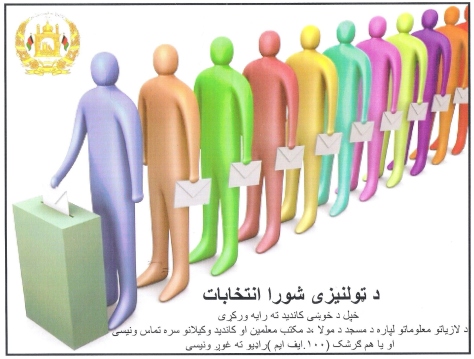
District Council Elections

DCC Election Poster

Voters go to the polls across the UK today to elect their district councils. The democratic process was a little different in Afghanistan:

“NAHR‑E‑SARAJ IS ONE of 14 districts which make up Helmand Province. Each is governed by a council of elected officials known as the District Community Council (DCC). This was an entirely Western institution conceived by the Helmand Provincial Reconstruction Team (HPRT) and overseen by the DST. Founded in 2010, elections were to be held every couple of years when each of the mosques in the district would be entitled to select three men to represent them. These representatives would then form an electoral college who would vote on the 20 or so from their number who would actually serve as DCC councillors.

Gereshk being a shockingly liberal city, the Nahr‑E‑Saraj DCC was unique in Helmand Province in having a small number of female councillors. This was something the DST had insisted upon at the initial election and which had been grudgingly accepted by the district’s menfolk. To get around the obvious problems of actually allowing women a free vote, or the possibility that a female might defeat a male election candidate, such women as were permitted to do so by their husbands held a separate vote to select only the female councillors. On election, these token women councillors were not allowed to join their male colleagues at the council table and were authorised to debate and vote only on women’s issues. No one seemed entirely clear what these gender specific issues were, but this didn’t matter because they were never discussed.

Despite these rather obvious flaws, the DST took great pride in its female councillors. To my mind, rather than representing progress towards gender equality, they highlighted the lack of it.

It was not only women who lacked representation on the Community Council. Many of the outlying areas in the district did not have a councillor to represent them. This was because these areas were under the control of the Taliban who had not conveniently signed up to the PRT’s plan to bring democracy to Helmand Province. In fact the Taliban had so actively discouraged participation in the DCC that a few would‑be councillors had died of democracy as they slept in their beds. Somehow, the PRT managed to find the silver lining even in these assassinations by declaring that this demonstrated the ‘resilience’ of the DCC institution.

In reality, while the DST looked the other way, Balool Khan the DCC’s venerable Chairman, a former Mujahideen fighter, gifted these vacant seats to his friends and tribal allies without the need for troublesome elections and they, in turn, re‑elected him as Chairman. This way Balool retained control of the Council and ensured that his own tribesmen were first in line for any handouts from the District Development Fund. This purported to be a state fund managed by the Ministry of Finance in Kabul. It was in reality a multi‑donor international aid package less an undisclosed percentage skimmed off by Ministry of Finance mandarins. This was how democracy worked in Afghanistan and by these standards it worked very well in Nahr‑E‑Saraj.

Perhaps I should not have been surprised. The PRT was, after all, trying to overlay democracy onto a regime of tribal patronage that had been in existence long before the birth of democracy in Athens around 510BC. Balool Khan was a wise old bird and I was pretty certain that as far as he was concerned the DCC’s only purpose was to part the infidel from his money. It was fair to say that he easily out‑smarted any of the DST officials, and I had to admire his ability to run rings around them. It seemed inevitable that he would revert to the old patronage system as soon as the funding dried up.

Naturally, the Helmand PRT glossed over these failings and relentlessly communicated progress in expanding governance and the delivery of basic services, when no such progress existed.

Having imposed the DCC construct on the province two years earlier, an election was now due. Between the DST’s incompetence, Balool Khan’s contrivance and the Taliban’s intimidation the Nahr‑E‑Saraj DCC had failed from the outset to represent the people of the district but this was an ideal opportunity to redress this parlous state of affairs. Giving residents the opportunity to vote for their chosen representatives and thereby gain some influence and control over their own future might just compel them to support the GIRoA administration.

The PRT was responsible for running the election and made it very clear from the outset that they did not require, or desire, military assistance in this matter. Much to my surprise residents of the district were to be given just ten days notice of the impending election. When I raised my concerns about the brevity of this timeline, the Helmand PRT’s Governance Advisor helpfully explained to me that this was intentional. His team would not be able to cope with large numbers of citizens actually turning out to vote. In a revelatory late‑night conversation in the J9 cell he further elucidated that it was important to create the semblance of an election without going to the trouble of actually holding an election. In his opinion this would be unnecessarily bothersome and might even result in candidates considered undesirable by the PRT getting elected.

I was stunned. In part by the suspiciously racist manner in which the GOVAD appeared to view the populace of Helmand. In far greater part by the implication that American, British and Danish soldiers were risking, and losing, their lives in the district so that the PRT could create the semblance of an election.”

SPIN ZHIRA: Old Man in Helmand is the true story of one man’s midlife crisis on the front line of the most dangerous district in Afghanistan where the locals haven’t forgiven the British for the occupation of 1842 or for the Russian Invasion of 1979. Of course, all infidels look the same so you can’t really tell them apart.

SPIN ZHIRA: Old Man in Helmand is available as an Amazon Kindle e-book


War hero is honoured by the Palace

War hero is honoured by the Palace
By Lesley Houston
PUBLISHED
28/10/2015

Lieutenant Colonel Dave Kenny is presented with his OBE by the Duke of Cambridge at Buckingham Palace

Dave Kenny

Somewhat belatedly, I’ve learned that Major (now Lieutenant Colonel) Dave Kenny has been honoured by the Palace. It’s good to see him with a bit of colour in his face.

“BY MID AUGUST, sustaining the soldiers manning the beleaguered temporary checkpoints had become the main focus for the battlegroup and almost all our resources and energy were invested in this activity.
Supporting 90 odd men behind enemy lines was an enormous operation, the details of which were coordinated by our Chief of Staff, Major Dave Kenney.
Each morning Dave would hold a meeting around the bird table – a makeshift table on which a large satellite image of the district had been pasted, affording us literally a bird’s eye view of our AO. This was overlaid with various traces, showing details such as operations boxes, interdiction boundaries, no fire lines and other information vital to military operations.
Standing around the table, Dave would receive a brief from each of the branch heads outlining the issues and concerns they were dealing with. He might then ask a few questions before giving further guidance and instructions. Unlike the Commanding Officer who never betrayed his emotions, Dave wore his heart on his sleeve and his worry and concern for the men on the ground was obvious for all to see. He rarely left the headquarters for more than a minute or two and his personal contribution to British American Tobacco revenues had reached record levels. Before our very eyes, Dave was growing pale and thin in the service of his country. The smokes, the lack of sleep and the stress were getting to him. He looked a wreck but steadfastly soldiered on without complaint.
I wondered if some of his anxiety was caused by scepticism about the plan. But if he shared my misgivings he never revealed this to me. It’s possible that he raised his concerns with Colonel James in private, as I had done myself, but in front of the staff he never expressed anything other than his loyalty to the Commanding Officer and an utter commitment to the mission.”

SPIN ZHIRA: Old Man in Helmand is the true story of one man’s midlife crisis on the front line of the most dangerous district in Afghanistan where the locals haven’t forgiven the British for the occupation of 1842 or for the Russian Invasion of 1979. Of course, all infidels look the same so you can’t really tell them apart.

SPIN ZHIRA: Old Man in Helmand is available as an Amazon Kindle e-book

via Northern Ireland war hero is honoured by the Palace – BelfastTelegraph.co.uk

Out manoeuvred, outgunned and out of breath.

No 2 Coy, Zumbalay

Yesterday I shared War on the Rocks blog, Outnumbered, Outranged and Outgunned. I was more frequently out manoeuvred, out gunned and out of breath in Afghanistan.

“IT’S A LITTLE after 4.30am and I’m already weeping sweat from every pore. This is partly because for some weeks now night-time temperatures have not fallen below 20°C/68°F, and partly because the combined weight of my combat body armour, weapon systems, ammunition, water and other equipment tops the scales at just over 52kilos, 65% of my bodyweight. It’s a burden that stretches sinews and cartilage to breaking point. It’s no wonder the Taliban, who go to war unencumbered by health and safety legislation, call us donkey soldiers. The British seaside donkey code of best practice recommends that donkey loads do not exceed 25% of an animal’s weight. No such guidance exists either for donkeys, or for British soldiers, in Afghanistan.

Fooling around on the lawns at Gooseberry Hall with Harry and Alfie we’d perfected a manoeuvre we called the triple in which Alfie would sit on Harry’s shoulders and Harry would then sit on mine. We would then stagger around the garden for a few minutes before eventually collapsing in a heap of bodies and a fit of giggles. Between them they weighed substantially less than the kit I’ll be wearing for the next eight hours as temperatures soar into the high thirties.

Studies have shown that at 173cm in my socks, I’m the perfect size and build for the modern infantry soldier. Human joints essentially work on a lever principle. The heavier the load and the longer the lever, the weaker the joint and the more prone it is to failure. So‑called short‑arses like me have an advantage over our taller and longer boned colleagues, but in my case I reckon these advantages are well past their sell‑by date. I’m not the only one who thinks so. Shortly after we arrived in MOB Price an anonymous colleague procured a Zimmer frame from somewhere and kindly placed this beside my desk in the J9 cell. I was touched by their concern for my welfare and mobility needs.”

SPIN ZHIRA: Old Man in Helmand is the true story of one man’s midlife crisis on the front line of the most dangerous district in Afghanistan where the locals haven’t forgiven the British for the occupation of 1842 or for the Russian Invasion of 1979. of course, all infidels look the same so you can’t really tell them apart.

SPIN ZHIRA: Old Man in Helmand is available as an Amazon Kindle e-book

Spin Zhira Content Rating

Outnumbered, Outranged and Outgunned


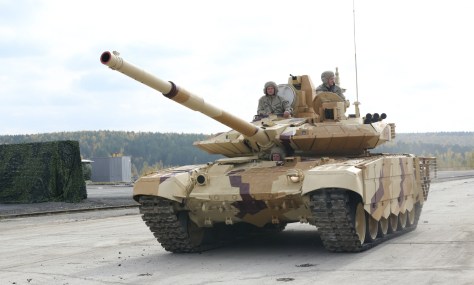
Russian Tank

In their article for War on the Rocks, David Schlapak and Michael Johnson reveal that NATO is outnumbered, outranged and outgunned by a resurgent Russia. They theorise that if “Russia were to conduct a short-warning attack against the Baltic States, Moscow’s forces could roll to the outskirts of the Estonian capital of Tallinn and the Latvian capital of Riga in 36 to 60 hours.” In order to stave off this threat they conclude that the US and its allies must develop an “improved posture and thoughtful, targeted modernization of the joint force.”

It’s a tactically sound analysis of the relative capabilities of Russian and NATO military hardware but it assumes that overwhelming force is a decisive advantage. As NATO and Russia both discovered to their cost in Afghanistan this is not the case. The ability to play a long game is far more decisive than the ability to match force with force.

Unpalatable truths

Spin Zhira Content Rating

Strong language, adult content, unpalatable truths. I’m afraid my book contains them all. But I suspect it would be impossible to write an honest account of any conflict without them and the war in Afghanistan was no exception:

“There was, however, another reason why I was attending the symposium. Brigadier Douglas Chalmers, the Task Force Helmand Commander was to give a keynote address. I’d made some potentially treasonous claims in my after‑dinner speech about the progress of the mission in Afghanistan. I was curious to hear what he had to say.

Naturally the senior British officer in Helmand Province could speak only of success. His military masters and his future career prospects depended upon this. But he chose some unusual metrics that suggested, perhaps, that he too had private reservations. He even touched upon the Helmand malaise of self‑deception to which I had myself acceded.

His commanders and advisors, he told us, would often tell him what he wanted to hear. In order to get to the ‘crystal truth’ about the state of Helmand he ended up talking to butchers and grocers instead.

‘I picked them because the Afghan capacity to eat meat is unrivalled on the planet, and the need for them to get a good supply is quite prevalent. On earlier tours I saw they were only really selling goat and chicken and on this tour I saw a lot more beef. Now, cattle are expensive and when you slaughter a cow, with a lack of refrigeration, you need to have the confidence to sell that cow. I saw a lot more cattle being slaughtered and a lot more cattle in people’s compounds.

I became fixated by tomatoes… it is quite a soft fruit and easily damaged, and again there is a lack of refrigeration. The market stalls were never without tomatoes. And the ability for them to be moved from the villages to the market towns was a good indication of the freedom of movement that the stall holders have.

From those two elements I got a sense of the micro economics in the market towns and cities.’

The Brigadier was right. Beef and tomatoes were both prevalent in the local markets and bazaars, and there seemed to be no shortage of customers with sufficient disposable income to purchase such luxury foodstuffs.

But I was less certain of the causality he presumed. The explosion of poppy production over which the British had inadvertently presided was more likely to be at the heart of the economic growth he described. Nahr‑E‑Saraj remained the most violent district in the most violent province in the whole of Afghanistan, manifestly unable to sustain itself on beef and tomatoes rather than poppy.

I think the Brigadier knew this too. I think he also knew, but could not publicly state, that there could be no effective military solution when the political objective was so far from aligned with the country’s underlying social framework.

DfID’s state building hubris and incompetence, together with the tsunami of poorly regulated international aid and the vested interests of the narco‑industry, had combined to create one of the most corrupt nations on earth, alongside Somalia and North Korea. These were metrics of which Brigadier Chalmers was surely aware but could not discuss. So instead he spoke of cautious optimism for the future.

I took this to be code for an excess of caution coupled with a lack of optimism.

If the Brigadier was visiting the bazaars and talking to the stall holders as he claimed, then he must have seen the same things I had seen. He too must have observed the dissonance between the official narrative of a better life with GIRoA and the evidence of his own eyes and ears. Or perhaps, despite his best efforts, the butchers and grocers he spoke to told him only what they thought he wanted to hear.

Brigadier Chalmers was clearly an intelligent and experienced officer and I did not believe he was blind to the realities of the failing Afghan mission. He did, however, have the unenviable task of motivating men for battle and of justifying whatever pain and suffering might then result. This may well have convinced him to keep his own counsel, for which I would not blame him.

In preparing for Afghanistan I’d been much motivated by the British 19th century philosopher, John Stuart Mill. Although Mill had no personal experience of combat he’d theorised that an honest war could be a means of personal regeneration.

At a time when I was trying to seek some purpose and guidance in my life beyond the accumulation of wealth and possessions I’d seized upon this notion to justify abandoning my wife and young children in the pursuit of some higher purpose.

With hindsight, despite our very best intentions, it seemed we all had fought under a misapprehension. Rather than protect other human beings against tyrannical injustice we had preserved tyrannical injustice in the form of a hopelessly corrupt and irredeemable government.

We had been used as mere human instruments for firing cannon or thrusting bayonets, in the service and for the selfish purposes of a governor in the pay of the illegal opium trade and of a police chief feathering his own nest and lining it with little boys for unspeakable purposes.

Rather than face up to the unpleasant reality of the things we knew to be happening around us, and which we appeared to be perpetuating, we blinded ourselves with self‑deceit.

Perhaps it was fanciful thinking on my part to believe that Brigadier Chalmers might share my own deep misgivings. After all we had met only once before when he had misjudged my efforts to influence policy in Afghanistan as ‘deeply impressive’. But if I was right, we were not alone in self‑deceit.

It enveloped us all:

In the pronouncements of the Provincial Reconstruction Team; in the declarations of successive Prime Ministers; in the statements of visiting government officials, movie stars, musicians and glamour models; in the cautiously optimistic reports of the international media; in the glittering array of honours and awards bestowed upon Afghan veterans, and in the millions donated to service charities.

Rather than admit the possibility of failure we embraced this deceit, basking in its warming, self‑satisfying glow before perpetuating the deceit ourselves so that others might also enjoy its embrace.

But these were just my personal musings. I wasn’t a government minister, or a glamour model, so what did I know?

Perhaps in years to come the third Anglo‑Afghan War (2003–2014) will be seen as a blueprint for military intervention, counter‑insurgency, international development and state building. Catriona Laing, the head of the Helmand PRT seemed to think so when she earnestly pronounced:

‘We have presented the people of Helmand with an opportunity. They have grabbed it enthusiastically, confidently… it’s now in their hands for the future.’

I am far less certain history will agree with her.”

SPIN ZHIRA: Old Man in Helmand is the true story of one man’s midlife crisis on the front line of the most dangerous district in Afghanistan where the locals haven’t forgiven the British for the occupation of 1842 or for the Russian Invasion of 1979. Of course, all infidels look the same so you can’t really tell them apart.

SPIN ZHIRA: Old Man in Helmand. A true story.


No Life Crisis

Author, CP Spondon

Martin Daubney writes in The Telegraph about his “No Life Crisis” where the feeling of “Where did my life go?” quickly leads to “I’m getting the drinks in before I get old – even if it kills me”. I know exactly how he feels except I have a very low tolerance for alcohol so I had to find an alternative to getting the drinks in – and it very nearly did kill me.

SPIN ZHIRA: Old Man in Helmand is the true story of one man’s midlife crisis on the front line of the most dangerous district in Afghanistan where the locals haven’t forgiven the British for the occupation of 1842 or for the Russian invasion of 1979. Of course, all infidels look the same so you can’t really tell them apart.

When Chris Green became disillusioned with his cosseted but largely unremarkable life as a Marketing Executive he didn’t buy a sports car or snort cocaine from the breasts of prostitutes. Instead he joined the Army Reserve and went to fight the increasingly unpopular war on terror in Afghanistan.

In the process of discovering himself he unwittingly discovers that the courage and heroism of the soldiers he fights alongside are confounded by self-deception, incompetence, corruption and an industrial strength counterterrorism killing machine.

It’s a world where the dipsomaniac Governor is in the pay of the illicit opium trade, the Chief of Police is a pederast and all-round bad guy and the UK’s Department for International Development just make shit up.

Missing his two young sons, unable to influence policy and just a phone call away from a brawl he can only lose with the elite SAS, Chris dreams of epic powder days in the High Alps a world away from Afghanistan. But before he can return home to a hero’s welcome — and his wife’s divorce lawyers — he must first complete one last mission to Zumbalay, the Taliban Heart of Darkness and an unlikely reunion with an old man in Helmand.

SPIN ZHIRA: Old Man in Helmand is available as an Amazon Kindle e-book