Tag Archives: Afghanistan

“A very good read”

William Reeve, former BBC World Service and Afghanistan correspondent recently reviewed Spin Zhira. Here’s what he said:

Amazon Five StarsA VERY GOOD READ WITH MANY INSIGHTS WELL WORTH HEEDING
This book is not just for soldiers who have fought in Helmand and in other conflicts. It’s a very engaging account in the voice of a soldier that should be read by all those interested in the world about them, and especially by civilians involved in any way with conflicts. Chris Green is certainly very blunt about one and all, about their strengths and weaknesses and about how they deal with often very difficult, sad or indeed absurd situations. He is also very engaging about his own thoughts day by day, making poignant observations on often very serious issues, told with colourful examples. Let’s hope this book is available, especially on bookshelves, for many years to come, as the valuable insights on its pages are well worth heeding – and very enjoyable to read.

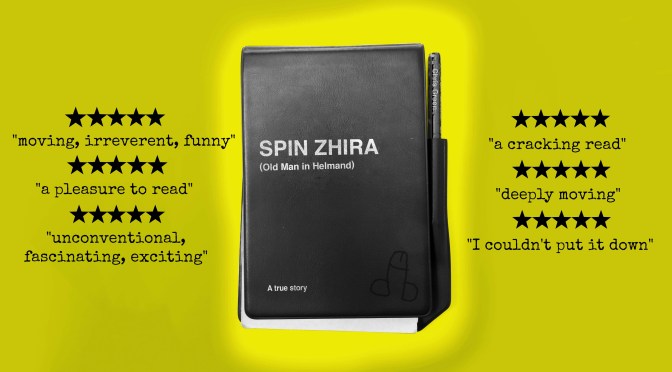
SPIN ZHIRA: Old Man in Helmand. A true story of love, service and incompetence. Guaranteed to make you laugh and cry or your money back (but check the smallprint first).

‘Brims with authenticity and dark humour.’
Patrick Hennessey, bestselling author of The Junior Officers’ Reading Club

‘First class’
Doug Beattie, bestselling author of An Ordinary Soldier

‘A must read.’
Richard Dorney, bestselling author of The Killing Zone

‘The best book by a soldier concerning the Afghan War that I have read’
Frank Ledwidge, bestselling author of Losing Small Wars

‘Five stars’
SOLDIER The official magazine of the British Army

Ten reasons to read SPIN ZHIRA.

What others are saying about SPIN ZHIRA.

‘We’re making real progress’, say last 17 commanders in Afghanistan

DuffelBlog’s tongue in cheek report by Cat Astronaut is a little unfair on General John Nicholson who, rather than ‘real progress’ has actually reported a ‘stalemate‘ in Afghanistan. But the point is still well made.

We continue to blind ourselves to failure in Afghanistan with self-deceit and the relentless pursuit of good news where none exists:

‘With hindsight, despite our very best intentions, it seemed we all had fought under a misapprehension. Rather than “protect other human beings against tyrannical injustice” we had preserved tyrannical injustice in the form of a hopelessly corrupt and irredeemable government.

We had been “used as mere human instruments for firing cannon or thrusting bayonets, in the service and for the selfish purposes” of a governor in the pay of the illegal opium trade and of a police chief feathering his own nest and lining it with little boys for unspeakable purposes.

Rather than face up to the unpleasant reality of the things we knew to be happening around us, and which we appeared to be perpetuating, we blinded ourselves with self‑deceit.

Perhaps it was fanciful thinking on my part to believe that Brigadier Chalmers might share my own deep misgivings. After all we had met only once before when he had misjudged my efforts to influence policy in Afghanistan as “deeply impressive”. But if I was right, we were not alone in self‑deceit.

It enveloped us all:

In the pronouncements of the Provincial Reconstruction Team; in the declarations of successive Prime Ministers; in the statements of visiting government officials, movie stars, musicians and glamour models; in the “cautiously optimistic” reports of the international media; in the glittering array of honours and awards bestowed upon Afghan veterans, and in the millions donated to service charities.

Even though, in my heart of hearts, I knew these claims to be false I perpetuated them myself because I desperately wanted them to be true. Not because national pride or high profile political and military careers were at stake – although this was certainly the case. I wanted to record success because, in the previous nine months, I had seen men killed and others grievously wounded in the pursuit of these aims. Their sacrifice should mean something. The pain and suffering endured by their loved ones should not be in vain.

So, rather than admit the possibility of failure I embraced the deceit and, to my shame, I found myself basking in its warming glow of self-satisfaction. I consoled any inner misgivings by telling myself I wasn’t a government minister, or a glamour model, so what did I know?’

SPIN ZHIRA: Old Man in Helmand. A true story of love, service and incompetence. Guaranteed to make you laugh and cry or your money back (but check the smallprint first).

‘Brims with authenticity and dark humour.’
Patrick Hennessey, bestselling author of The Junior Officers’ Reading Club

‘First class’
Doug Beattie, bestselling author of An Ordinary Soldier

‘A must read.’
Richard Dorney, bestselling author of The Killing Zone

‘The best book by a soldier concerning the Afghan War that I have read’
Frank Ledwidge, bestselling author of Losing Small Wars

‘Five stars’
SOLDIER The official magazine of the British Army

Ten reasons to read SPIN ZHIRA.

What others are saying about SPIN ZHIRA.

Nation Building doesn’t work

11 Police Officers have been killed at a checkpoint in Lashka Ghar, the capital city of Helmand Province and the former citadel of Task Force Helmand.

Visited by Prime Minister David Cameron in 2012 it was once the epicentre of Britain’s £15m/day nation building mission to Afghanistan. It is a sad marker of failure that Lashka Ghar has been under siege since the summer of 2016 and would have fallen to the Taliban in October were it not for US military intervention.

Meanwhile, Sarah Sands, reporting for the Evening Standard reveals that Priti Patel the Secretary of State for International Development continues to describe the British mission in Afghanistan as ‘Nation Building’.

In January Prime Minister Theresa May told US Republicans the UK and America cannot return to “failed” military interventions “to remake the world in our own image”. She is, of course, correct. Two disastrous counter-insurgency interventions in Iraq and Afghanistan are clear evidence that nation building in our own image doesn’t work, but it seems the doctrine still stubbornly persists.

When will the Prime Minister communicate her message to the Department for International Development?

SPIN ZHIRA: Old Man in Helmand. A true story of love, service and incompetence. Guaranteed to make you laugh and cry or your money back (but check the smallprint first).

‘Brims with authenticity and dark humour.’
Patrick Hennessey, bestselling author of The Junior Officers’ Reading Club

‘First class’
Doug Beattie, bestselling author of An Ordinary Soldier

‘A must read.’
Richard Dorney, bestselling author of The Killing Zone

‘The best book by a soldier concerning the Afghan War that I have read’
Frank Ledwidge, bestselling author of Losing Small Wars

‘Five stars’
SOLDIER The official magazine of the British Army

Ten reasons to read SPIN ZHIRA.

What others are saying about SPIN ZHIRA.

A true story of love, service and incompetence.

When I set out to write Spin Zhira my benchmarks were An Ordinary Soldier by Doug Beattie MC, The Junior Officers’ Reading Club by Patrick Hennessey, Losing Small Wars by Frank Ledwidge and The Killing Zone by Richard Dorney.
I read many books as I prepared for deployment to Afghanistan, but these four stood head and shoulders above the rest.
Consequently, I’m enormously proud that the authors have so positively reviewed my attempts to emulate them.
Here’s what they said:
kandak-and-jorc
‘Brims with authenticity and dark humour.’
Patrick HennesseyThe Junior Officers’ Reading Club
 
frank-ledwidge-books
‘The best book by a soldier concerning the Afghan War that I have read.’
Frank LedwidgeLosing Small Wars
 
the-killing-zone-and-an-active-service
‘A must read.’
Richard DorneyThe Killing Zone
 
doug-beattie-books
‘First Class.’
Doug BeattieAn Ordinary Soldier
 
Follow the link to read the full reviews.
SPIN ZHIRA: Old Man in Helmand.

A true story of love, service and incompetence.

Chris Green had it all. chris-green-had-it-all-check-list

But when Chris became disillusioned with this seemingly perfect existence he didn’t:

car-coke-au-pair-2Instead he went to fight the increasingly unpopular war on terror in Afghanistan.

war-on-terror

In the process of discovering himself he unwittingly discovers that the courage and heroism of the soldiers he fights alongside are confounded by incompetence and corruption, not to mention “an industrial strength counterterrorism killing machine”.

It’s a world where the dipsomaniac governor is in the pay of the illicit opium trade, the Chief of Police is a pederast and all round bad guy and the locals still haven’t forgiven the British for the occupation of 1842, or for the Russian Invasion of 1979. All infidels look the same so you can’t really tell them apart.

Missing his two young sons, unable to influence policy and just a phone-call away from a brawl he can only lose with the elite SAS, Chris dreams of epic powder days in the High Alps a world away from Afghanistan. But before he can return home to a hero’s welcome – and his wife’s divorce lawyers – he must first complete one last mission to Zumbalay, the Taliban Heart of Darkness and an unlikely reunion with an old man in Helmand.

Spin Zhira is a rare insight into the male mid-life crisis. What every woman needs to know and why every man should be careful what he wishes for.

Ten reasons to read Spin Zhira.

Setting off to War

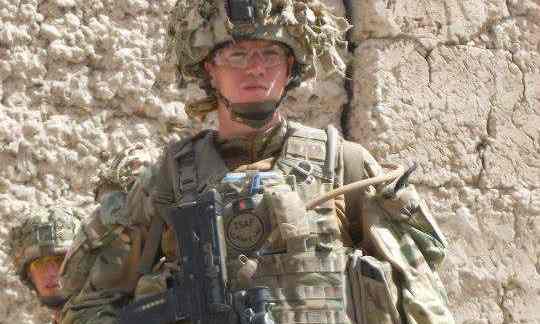
On this day five years ago I set off to war, speeding down the M4 motorway in the dead of night in an overloaded minibus.

5-4

I RETURNED TO the barracks to find a group of soldiers standing around their bergans, like so many girls at a school disco, quietly chatting and smoking, their cigarettes glowing in the dark as they patiently waited for the transport to RAF Brize Norton. A voice addressed me from the shadows:

“Good of you to make it, Chris.”

It was the Adjutant, Captain Rupert Stevens. Rupert had been one of the first Grenadiers I’d met almost two years ago and although he’d always been supportive of my ambition to mobilise with the battalion, that didn’t mean he was averse to a bit of squaddie banter. He informed me that our trooping flight was scheduled for 07.00 the following morning but as this was ‘Crab Air’, army slang for the Royal Air Force, this was not a departure time but a no move before time. In his opinion it was anyone’s guess when we might eventually take off.

Rivalry and deep cultural differences between the armed services ensured that Rupert, like all self‑respecting soldiers, did not have a kind word to say about the RAF. Still there was some truth behind his comments. The RAF was trying to maintain a busy air bridge between the UK and Afghanistan using an ageing fleet of Lockheed TriStar aircraft. These had first come into service in 1978 as commercial airliners operated by Pan American Airways who subsequently sold them to the RAF shortly after the Falklands War.

After 34 years of service the TriStar was showing its age and, a bit like myself, was only just about fit for purpose.

Troops had become resigned to long delays in the journey to and from Afghanistan. It’s also fair to say that the RAF, unlike the aircraft’s original owner, is not a customer focussed organisation and puts little thought into the welfare of its passengers. We would all spend many hours experiencing RAF hospitality and it was never enjoyable. Disparaging comments not only helped to pass the time but also managed expectation.

Some months later a much publicised visit to Afghanistan by James Blunt and Catherine Jenkins was cancelled after the TriStar in which they were travelling was forced to abort and return to Cyprus, not once but twice, with first an air leak and then a problem with the undercarriage. James Blunt, himself a former soldier, was not impressed and wrote an uncomplimentary article in The Telegraph which delighted the rank and file but angered the top brass, who disputed his claims of military incompetence. For Rupert, who had been tasked with organising this visit and who had boasted for days about his self‑appointed role as Catherine Jenkins’ personal assistant, this would only serve to confirm his already very low opinion of the RAF.

Ironically, despite his obvious frustration, the RAF had actually done James a favour. So far as I could tell, Rupert had invested considerable time and effort preparing a detailed and comprehensive visit programme for Catherine in which he intended personally to take care of her every need and desire. By contrast he’d assumed ‘Blunty’ would doss down in the honking transit accommodation and sort himself out.

01.00 came and went with no sign of the coaches. No one seemed to mind terribly much and we continued chatting in our little groups as the grass turned white with frost around us. It was bitterly cold but since none of my colleagues, not even Tom, seemed to have noticed, I wasn’t about to bring it up. Nor did they seem to share my own sense of foreboding. The group appeared relaxed, almost carefree. It would have been hard to tell that these men, only a few hours previously, had said goodbye to their families and were setting off to a war with which they were already familiar and which had claimed the lives of friends and colleagues.

Some, like Captain Paddy Rice, even bore the scars of previous deployments. Paddy, described by The Telegraph in 2009 as ‘the luckiest soldier in Afghanistan’, had narrowly escaped death when he was targeted by a Taliban sniper. The bullet had entered just below his left shoulder blade, travelled across his back and exited by his right ear. Paddy had calmly lit a cigarette before radioing in his own nine liner¹ requesting immediate medical evacuation to Camp Bastion.

A gunshot wound is an almost guaranteed ticket home and a lesser man might have chosen to convalesce in the UK but Paddy was back on duty just three weeks later. With nothing to do all day but sit around smoking, Paddy reckoned Camp Bastion hospital had been bad for his health. So he’d volunteered to return to his unit as soon as possible.

Eventually someone went in search of some news and a short while later an ancient Ford Fiesta screeched up. It was Dave Kenny, our Chief of Staff, who would not be deploying for another few months. He jumped out, talking urgently into a mobile phone. Looking thoroughly harassed, he explained that there’d been a SNAFU² and the coach was booked for the following day. It was now close to 2am and he was trying to organise some alternative transport. Not unreasonably, everyone who might be able to assist him was tucked up asleep in bed.

He jumped back into the Fiesta, phone still clamped to his ear and roared away, wheels spinning, to return half an hour later with a couple of minibuses and two bleary-eyed drivers. Somehow, with Dave clucking about us like a mother hen, we managed to load all our gear and ourselves into these vehicles. Packed like sardines, we set off at breakneck speed.

Barrelling down the motorway in an overloaded minibus in the dead of night was not quite how I’d imagined myself setting off to war.

¹Nine Liner: Medical evacuation request, so called because of the nine point reporting format
²SNAFU: situation normal, all fucked up

SPIN ZHIRA: Old Man in Helmand is the unauthorised, unvarnished and irreverent story of one man’s midlife crisis on the front line of the most dangerous district in Afghanistan where the locals haven’t forgiven the British for the occupation of 1842 or for the Russian Invasion of 1979. Of course, all infidels look the same so you can’t really tell them apart.

‘The best book by a soldier concerning the Afghan War that I have read’
Frank Ledwidge, bestselling author of Losing Small Wars and Investment in Blood

‘SPIN ZHIRA vividly conveys the disjointed essence of modern warfare and the impossibility of balancing the adrenaline of combat with ‘normal’ life. This book brims with authenticity and dark humour.’
Patrick Hennessey, bestselling author of The Junior Officers’ Reading Club and Kandak

‘If you want to read about political and military success in Afghanistan, this book isn’t for you. If you want a fresh perspective from someone who is not a career officer and who is brave enough to bare his soul, then SPIN ZHIRA is a must read.’
Lt Col Richard Dorney, bestselling author of The Killing Zoneand An Active Service

‘Five stars’
SOLDIER The official magazine of the British Army

‘A journey of love, service and adventure. Excellent.’
Amazon Customer

Ten reasons why you should read SPIN ZHIRA.

The Calamities of War

The Guardian reports that ‘the US military in Afghanistan is increasingly trying to control public information about the war, resulting in strained relations with western organisations offering different versions of events to official military accounts.’

The suggestion is that the US military are trying to suppress ‘off-message’ accounts of civilian casualties in airstrikes. It wouldn’t be the first time in Afghanistan that ‘maintaining the narrative’ gets in the way of telling the truth.

As Samuel Johnson observed way back in 1758, ‘Among the calamities of war may be justly numbered the diminution of the love of truth, by the falsehoods which interest dictates and credulity encourages.’

SPIN ZHIRA: Old Man in Helmand is the unauthorised, unvarnished and irreverent story of one man’s midlife crisis on the front line of the most dangerous district in Afghanistan where the locals haven’t forgiven the British for the occupation of 1842 or for the Russian Invasion of 1979. Of course, all infidels look the same so you can’t really tell them apart.

‘The best book by a soldier concerning the Afghan War that I have read’
Frank Ledwidge, bestselling author of Losing Small Wars and Investment in Blood

‘SPIN ZHIRA vividly conveys the disjointed essence of modern warfare and the impossibility of balancing the adrenaline of combat with ‘normal’ life. This book brims with authenticity and dark humour.’
Patrick Hennessey, bestselling author of The Junior Officers’ Reading Club and Kandak

‘If you want to read about political and military success in Afghanistan, this book isn’t for you. If you want a fresh perspective from someone who is not a career officer and who is brave enough to bare his soul, then SPIN ZHIRA is a must read.’
Lt Col Richard Dorney, bestselling author of The Killing Zoneand An Active Service

‘Five stars’
SOLDIER The official magazine of the British Army

‘A journey of love, service and adventure. Excellent.’
Amazon Customer

Ten reasons why you should read SPIN ZHIRA.


Elephants in Afghanistan

Jason Dempsey, a former special assistant to the Chairman of the Joint Chiefs of Staff,  writes persuasively for War on the Rocks that ‘replicating the American military in Afghanistan makes no more sense than cowboys on elephants.’

I happen to agree with him but it is no more outlandish than replicating the American democratic system or American liberal values of gender equality and religious tolerance. US/UK counter-insurgency doctrine is childishly optimistic and doesn’t work.

SPIN ZHIRA: Old Man in Helmand

‘The best book by a soldier concerning the Afghan War that I have read’
Frank Ledwidge, bestselling author of Losing Small Wars and Investment in Blood

‘SPIN ZHIRA vividly conveys the disjointed essence of modern warfare and the impossibility of balancing the adrenaline of combat with ‘normal’ life. This book brims with authenticity and dark humour.’
Patrick Hennessey, bestselling author of The Junior Officers’ Reading Club and Kandak

‘If you want to read about political and military success in Afghanistan, this book isn’t for you. If you want a fresh perspective from someone who is not a career officer and who is brave enough to bare his soul, then SPIN ZHIRA is a must read.’
Lt Col Richard Dorney, bestselling author of The Killing Zoneand An Active Service

‘Five stars’
SOLDIER The official magazine of the British Army

‘A journey of love, service and adventure. Excellent.’
Amazon Customer

Ten reasons why you should read SPIN ZHIRA.

The long walk back to work

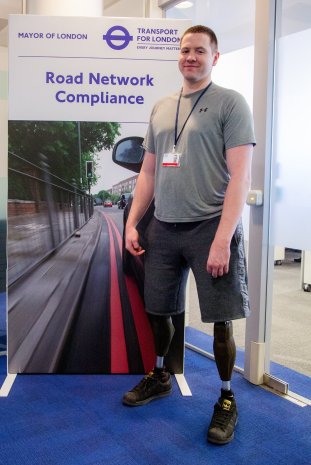
It’s good to see John Wilson in the news and carving out a new career for himself at Transport for London.

John, a London Regiment soldier with whom I deployed to Afghanistan in 2012, was severely injured when he triggered a victim operated improvised explosive device (VOIED) while on a foot patrol. John lost both his legs in the detonation.

I was also on the ground that day on another task just a couple of clicks away and heard the blast. We knew one of our colleagues was severely injured when a MERT helicopter flew overhead to recover the casualty. My patrol was required to stay on the ground overnight so it wasn’t until we returned to base the next day that I discovered it was John. It’s always harder when it’s one of your own and I was devastated for him.

A couple of weeks later, while on R&R, I was able to visit him at Selly Oak hospital in Birmingham. We met again at the end of the tour when John was sufficiently recovered that he was able to attend the London Regiment Homecoming parade.  On both occasions I found his courage, optimism and good humour in adversity to be inspirational.

Like all soldiers suffering life changing injuries John’s road to recovery has been long and hard. I recall being particularly moved when John declared that having painstakingly trained himself to walk again he found that he had nowhere to walk to.

Consequently, it’s wonderful to learn that John now has a full-time job at TfL and a reason to get out of bed each morning. I’m going to hazard a guess that there can be few men who enjoy their walk to work more than him.

2888

SPIN ZHIRA: Old Man in Helmand

‘The best book by a soldier concerning the Afghan War that I have read’
Frank Ledwidge, bestselling author of Losing Small Wars and Investment in Blood

‘SPIN ZHIRA vividly conveys the disjointed essence of modern warfare and the impossibility of balancing the adrenaline of combat with ‘normal’ life. This book brims with authenticity and dark humour.’
Patrick Hennessey, bestselling author of The Junior Officers’ Reading Club and Kandak

‘If you want to read about political and military success in Afghanistan, this book isn’t for you. If you want a fresh perspective from someone who is not a career officer and who is brave enough to bare his soul, then SPIN ZHIRA is a must read.’
Lt Col Richard Dorney, bestselling author of The Killing Zoneand An Active Service

‘Five stars’
SOLDIER The official magazine of the British Army

‘A journey of love, service and adventure. Excellent.’
Amazon Customer

Ten reasons why you should read SPIN ZHIRA.

Khalid Kelly and me.

ISIS have reported the death of suicide bomber, Abu Osama Irelandi in an attack outside Mosul in which he was the only casualty.

Abu, also know as Taliban Terry or Khalid Kelly was born in 1967, Terence Edward Kelly and grew up in Dublin before moving to London to train as an intensive care nurse. Attracted by the tax free salary, Kelly then took a nursing job in Saudi Arabia. Not long afterwards he began supplementing his nursing income as a bootlegger. ‘I got really good at making drink. I had three stills in my house.’ He was subsequently arrested in Saudi Arabia in 2000 ‘with five cases of Johnny Walker in the back of my car’. He converted to Islam while incarcerated in a Saudi jail and was deported back to the UK in 2002, where he briefly got a job at St Thomas’s Hospital, London.

Without alcohol, Kelly’s life appears to have unraveled quickly. In 2008 he was declared a fugitive and fled the UK. In 2009 he was interviewed in Pakistan stating: ‘Next week, inshallah, I could be in Afghanistan fighting a British soldier.’ In May 2011 he returned to Ireland and was arrested after threatening to assassinate Barack Obama. In 2013 he moved to Ardagh, Co Longford where locals reported that ‘he never came into the pub’. At some point in late 2015, Kelly made a last fateful trip to Iraq.

To my surprise, I find that Kelly and I had much in common. We both have family, a wife from whom we are separated and two children. If Terry’s last photo is anything to go by, we’re both getting a bit too old for combat and we’re both proud to call ourselves London Irish. Thankfully, the comparison ends there.

SPIN ZHIRA: Old Man in Helmand is the unauthorised, unvarnished and irreverent story of one man’s midlife crisis on the front line of the most dangerous district in Afghanistan where the locals haven’t forgiven the British for the occupation of 1842 or for the Russian Invasion of 1979. Of course, all infidels look the same so you can’t really tell them apart.

Amazon Five Stars A JOURNEY OF LOVE, SERVICE AND ADVENTURE. EXCELLENT!

Amazon Five Stars A MODERN WARFARE LITERARY CLASSIC! OUTSTANDING READ.

Amazon Five Stars ENTERTAINING, THOUGHT-PROVOKING AND COMPULSORY TO READ.

Ten reasons why you should read SPIN ZHIRA.

Too Old for Combat

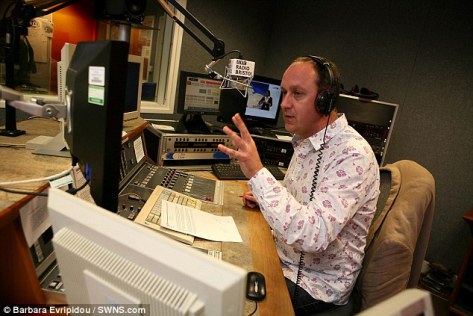
It was great to talk with John Darvall at BBC Radio Bristol this morning about my book and how I’m really getting too old for combat.

2709e90b00000578-0-image-a-1_1427451808086

You can listen to John’s show on the iPlayer Radio. My interview is from 2:10 to 2:32

SPIN ZHIRA: Old Man in Helmand is the unauthorised, unvarnished and irreverent story of one man’s midlife crisis on the front line of the most dangerous district in Afghanistan where the locals haven’t forgiven the British for the occupation of 1842 or for the Russian Invasion of 1979. Of course, all infidels look the same so you can’t really tell them apart.

Amazon Five Stars A JOURNEY OF LOVE, SERVICE AND ADVENTURE. EXCELLENT!

Amazon Five Stars A MODERN WARFARE LITERARY CLASSIC! OUTSTANDING READ.

Amazon Five Stars ENTERTAINING, THOUGHT-PROVOKING AND COMPULSORY TO READ.

Ten reasons why you should read SPIN ZHIRA.